
The complete guide
How to Choose a Small Gold Crystal Chandelier for Hallways, Bedrooms and Small Rooms
The problem with most small-room lighting
Walk down almost any hallway and look up. You will see a flat round disc, often with a frosted cover and a faint shadow of dead insects inside it. It lights the space. It does nothing else. Builders fit those because they are cheap and they clear head height, and most people never get around to changing them.
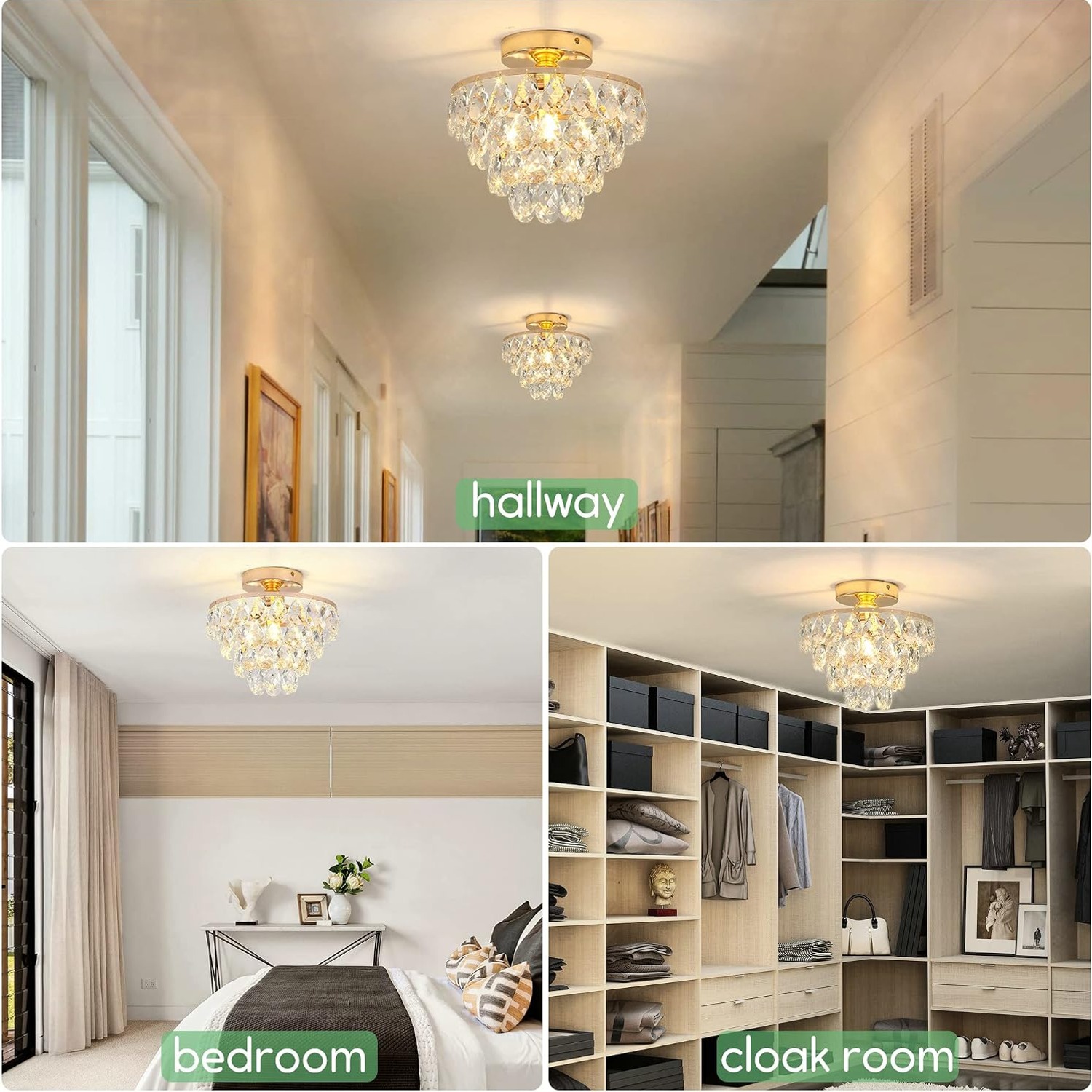
The thing is, hallways, entries, small bedrooms and closets are exactly where a nicer light does the most work. They are tight spaces. You see the ceiling more clearly in a narrow hallway than you do in a big living room. A small gold crystal chandelier solves the problem without creating a new one, because it still clears head height while giving you something worth looking at.
How a semi flush crystal fitting works
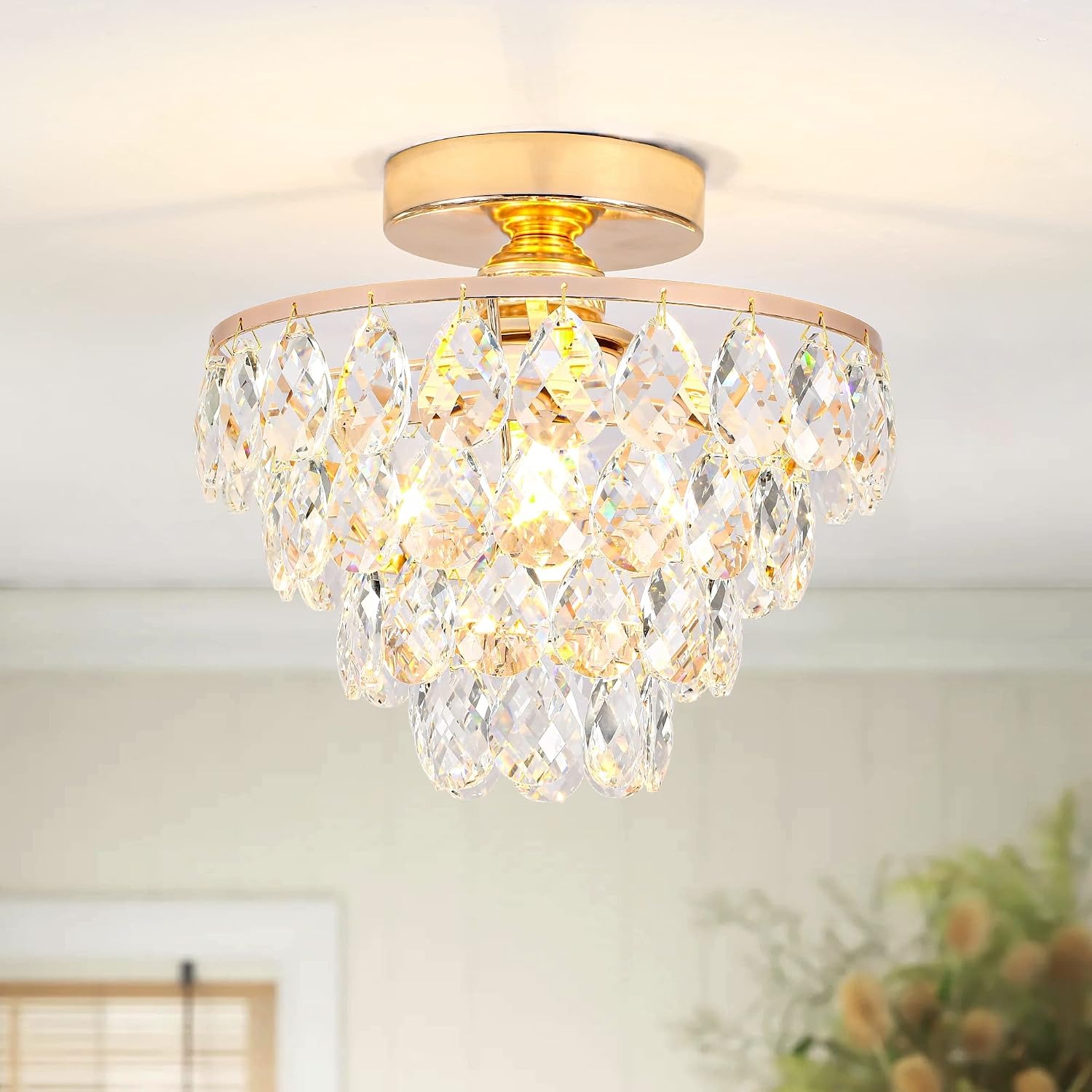
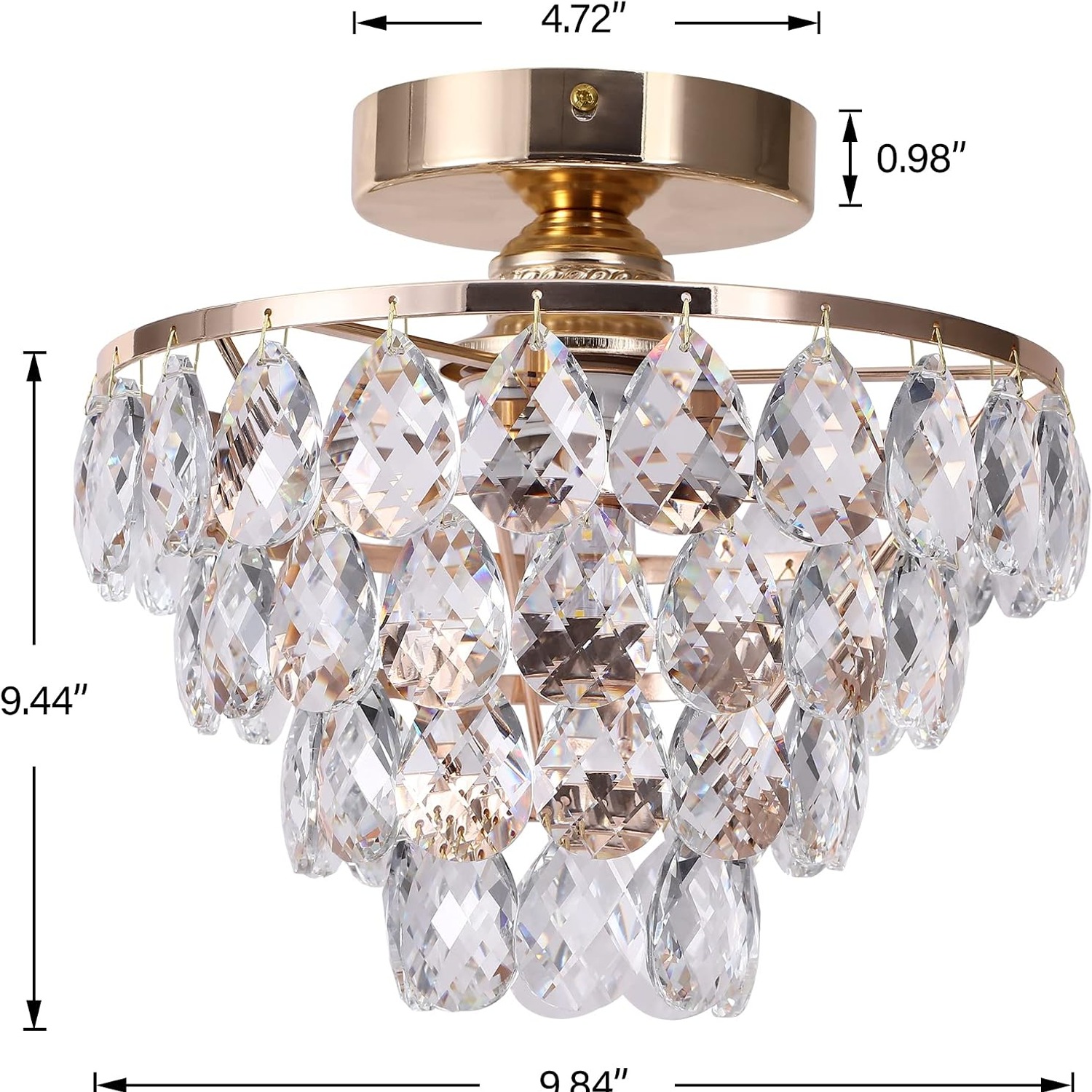
A proper chandelier hangs from a chain or a rod, which is lovely over a dining table and a nuisance anywhere people walk. A semi flush mount sits close to the ceiling, with just a short gap between the ceiling plate and the body of the light. This one is 10.5 inches tall in total and about 9.85 inches across, so it reads as a small decorative fitting rather than a statement piece.
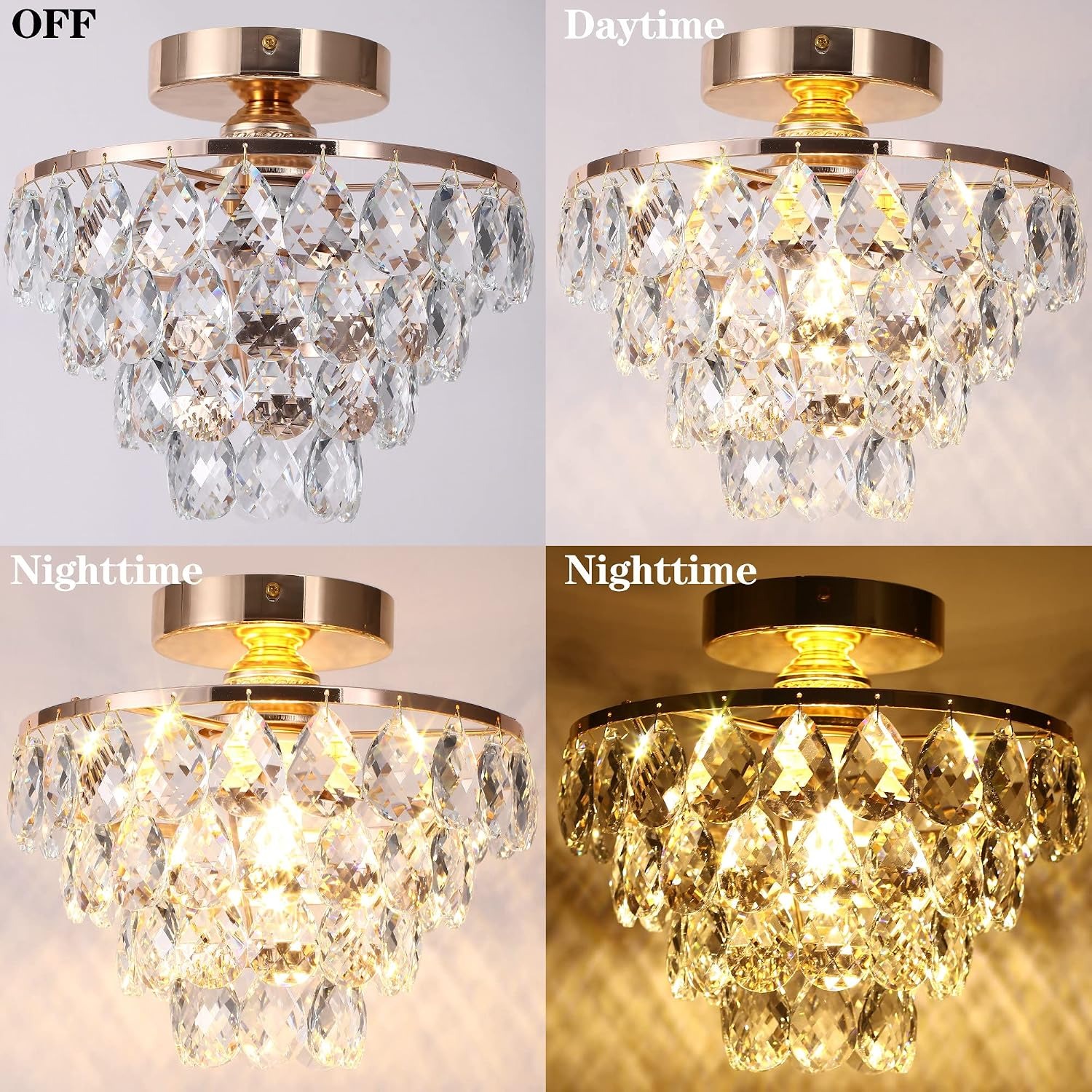
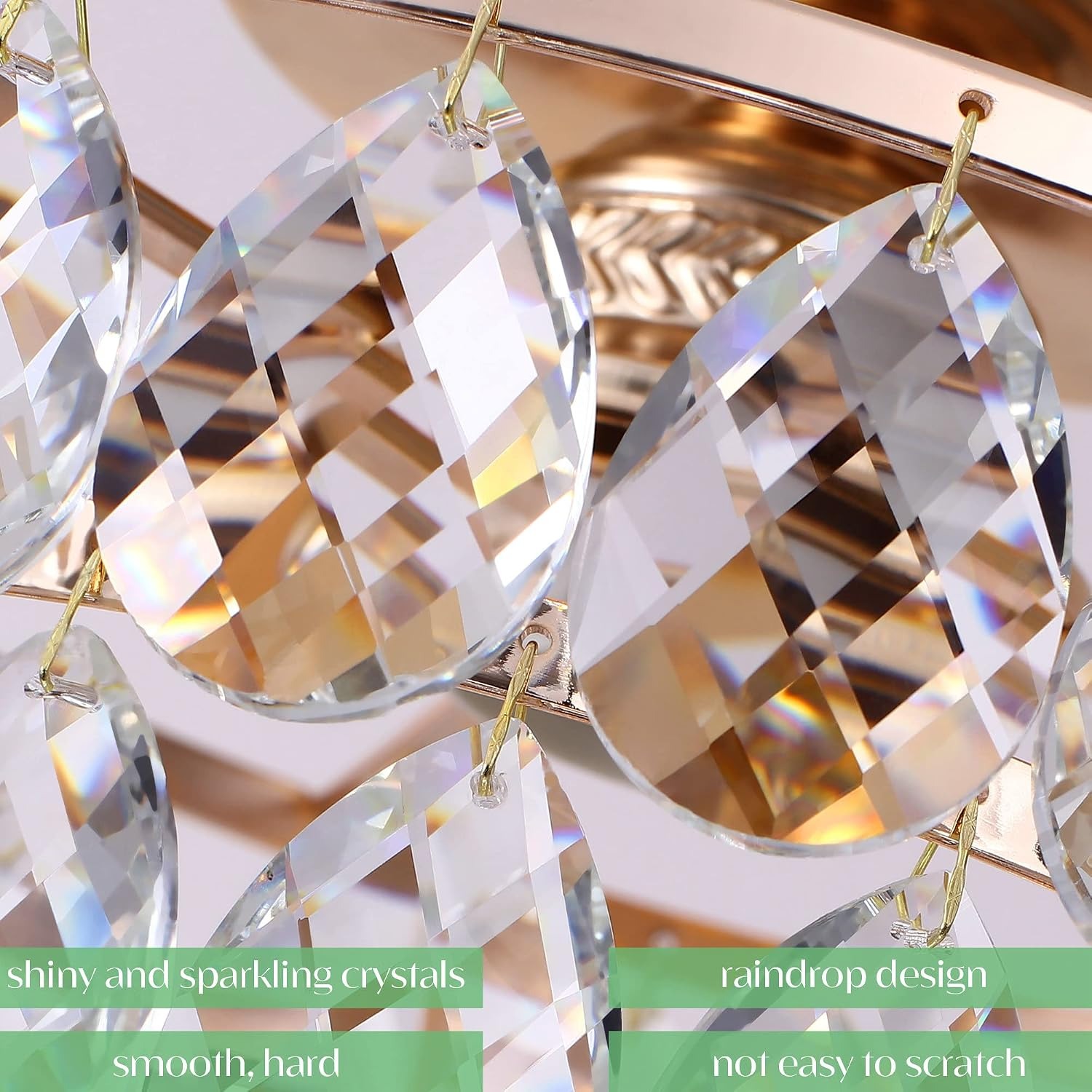
Inside sits a single bulb in an E26 socket, rated to 60 watts with a maximum output of 800 lumens. The light shines downward and passes through the raindrop crystals on the way. That is the whole trick. The crystals bend and split the light, so instead of one flat pool on the floor you get reflections across the ceiling and the nearest wall. In a hallway with pale paint, the effect is noticeable the moment you switch it on.
The frame is metal with a polished gold finish and an anti-rust treatment. Gold works well with crystal because it warms the reflections slightly. Against a white ceiling it stands out; against a darker ceiling it reads as a bright detail rather than a fixture.
Who this suits
This is the right fitting if your ceiling is standard height or lower and you want something more interesting than a disc. The listed room types are bedroom, entryway, kids room and living room, and in practice it also suits hallways, landings, small dining nooks and walk in closets.
It is a good pick for renters who want a visible change they can take with them, assuming the original fitting is kept and an electrician handles the swap both ways. It suits new builds where every ceiling has the same builder-grade light. It suits anyone redoing one room at a time, because the cost of a small crystal light for hallway use is far below a full-size chandelier.
It is not the right fitting if you need to light a large open-plan living space from a single point. At 800 lumens maximum it is a small light. In a big room, treat it as a feature and support it with lamps or additional fixtures. It is also unsuitable for bathrooms with open showers, laundries with steam, or anywhere outdoors, since it is specified for indoor use only and is not water resistant.
Choosing the right size and placement
Scale is where people get this wrong. A common rule of thumb for a room is to add the length and width in feet and use that number in inches as a rough diameter guide. A ten by twelve foot bedroom suggests around twenty-two inches, which is more than double this fitting. That does not mean this light is wrong for that room, it means it will read as a decorative accent rather than a dominant centrepiece. For a four foot wide hallway or a small entry, ten inches is close to perfect.
Height matters too. With a semi flush fitting at 10.5 inches, you lose under a foot of clearance from the ceiling. On an eight foot ceiling that leaves roughly seven feet of head room, which is fine for walking under. On a seven foot ceiling in an older cottage, measure carefully before committing.
If you are lighting a long hallway, two or three of these in a line usually beats one in the middle. Space them evenly, keep the drop identical, and the hallway reads as planned rather than patched. The same applies above a kitchen bench or a narrow run of cabinetry, though check your clearances first.
Bulbs, dimming and voltage
The socket is E26, which is one of the most common bases around. You can fit LED, incandescent, compact fluorescent or halogen, so you are not tied to a single technology. For most people an LED is the sensible pick, since it runs cool, uses little power and lasts for years. Keep within the 60 watt rating.
Bulb color changes the whole character of the fitting. A warm white bulb, somewhere around 2700K, gives soft golden reflections through the crystals and suits bedrooms and entries. A neutral white around 4000K looks crisper and more modern, and works better in a closet or over a work surface. If you cannot decide, buy one of each and try them. Bulbs are cheap and the difference is dramatic.
For dimming, you need two things working together: a dimmable bulb and a compatible dimmer switch. Neither is included. Putting a standard LED on a dimmer circuit usually causes flicker or a faint hum, which is annoying in a quiet bedroom. Check the bulb packaging for a dimmable marking and check the dimmer's compatibility list for LED loads.
One practical note. The listed voltage is 110 volts. Before you order, confirm that against the mains supply where you live and ask your electrician whether the fitting suits your wiring. That single check prevents the most common disappointment with imported fixtures.
Installing it without drama
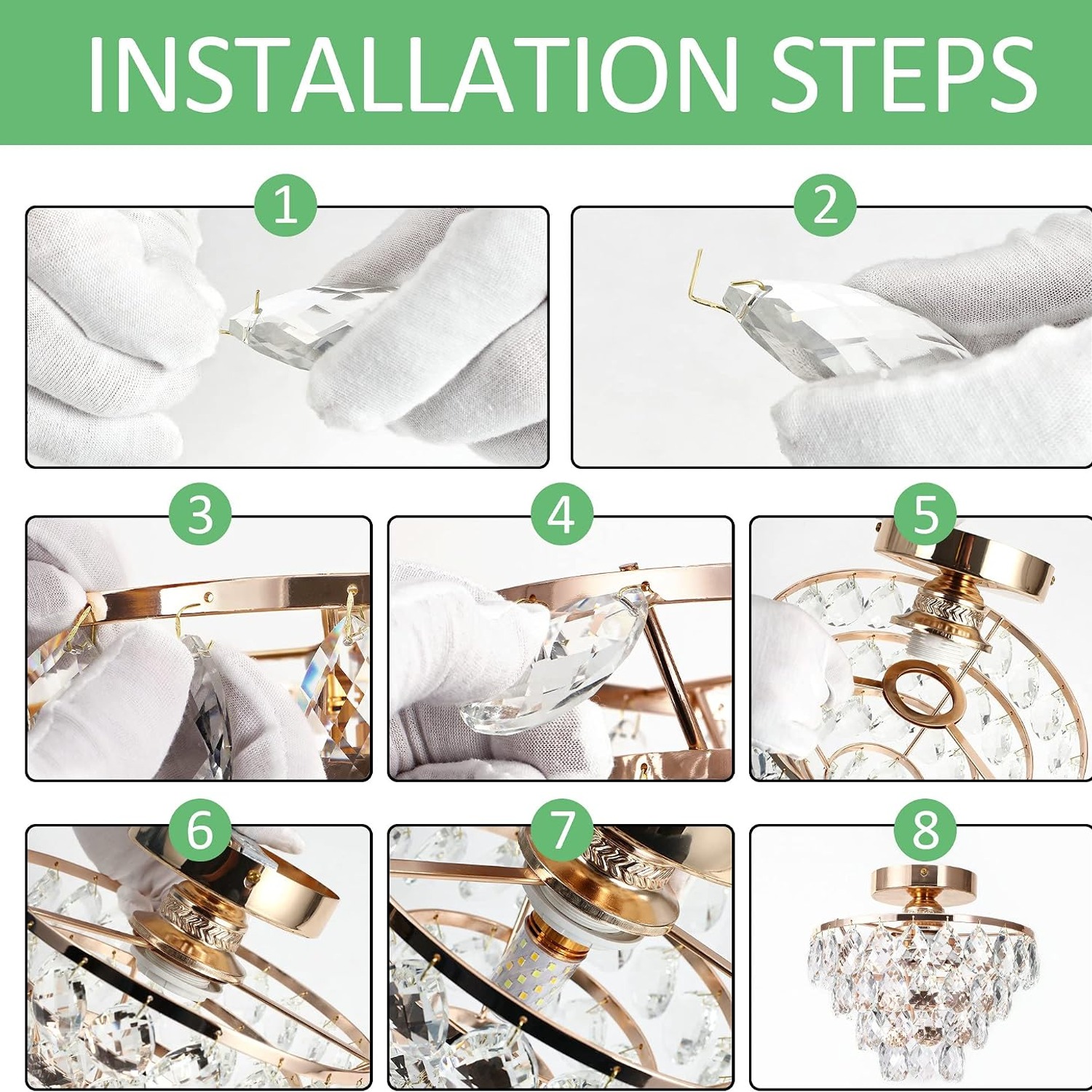
Some assembly is required. The usual order is to mount the fixture body to the ceiling first, connect the wiring, then hook the crystals onto the metal frame once the fitting is secure. All the mounting hardware and the instructions come in the box with the crystals.
Unpack over a bed, a rug or a folded towel. Crystal drops bounce when they land on tile. Count them against the instruction sheet before you start, and lay them out in order so the pattern is even when you hang them. Take a photo of the finished arrangement; it makes future cleaning much easier.
We recommend a licensed electrician for the wiring. The fitting is light at 4.53 pounds, so the ceiling box is rarely an issue, but an electrician will check that the box is secure, that the earth is correct and that the circuit suits the load. It is a short job and it protects your warranty.
Keeping it looking good
Crystal shows dust faster than frosted glass, which is the one real maintenance cost of a fitting like this. The good news is that cleaning takes minutes.
Turn the power off at the wall and let the bulb cool. Dust with a dry microfibre cloth, working from the top crystals down. For fingerprints or a hazy film, dampen a cloth very lightly with water, wipe, then dry straight away. Do not spray anything directly onto the fixture, and keep moisture away from the socket. Abrasive pads, bleach and household sprays will mark the gold finish.
Twice a year, check the crystal hooks and the mounting screws. Ceilings move a little with temperature and traffic, and a hook that has worked loose is easier to fix early. A fitting kept this way looks the same in five years as it did on day one.
The short version
This is a small gold crystal chandelier, around ten inches across and 10.5 inches tall, that mounts semi flush so it suits normal and lower ceilings. It takes one E26 bulb up to 60 watts, puts out a maximum of 800 lumens, and dims if you pair a dimmable bulb with a compatible dimmer. The frame is metal with a polished gold anti-rust finish and clear crystal drops.
It is indoor only and not water resistant. The bulb is not included; the crystals, mounting hardware and instructions are. Listed voltage is 110 volts, so check your supply first. The manufacturer warranty description states 3 years.
If your hallway, entry, bedroom or kids room still has a builder's disc on the ceiling, this is one of the easiest upgrades you can make, and it is the kind of change people notice without being able to say why the room feels better.