
The complete guide
How to Choose an LED Ring Pendant Light for Your Ceiling
The ceiling problem nobody talks about
Walk into most homes and look up. There is usually a flat disc of light stuck to the plaster, or a bare bulb in a shade that came with the house. It works. It also does nothing for the room.
Lighting is the one part of a renovation people put off because it feels technical. Paint is easy to picture. A rug is easy to picture. A light fixture involves wiring, heights and a decision about color temperature that most of us have never had to make on purpose. So the ugly disc stays.
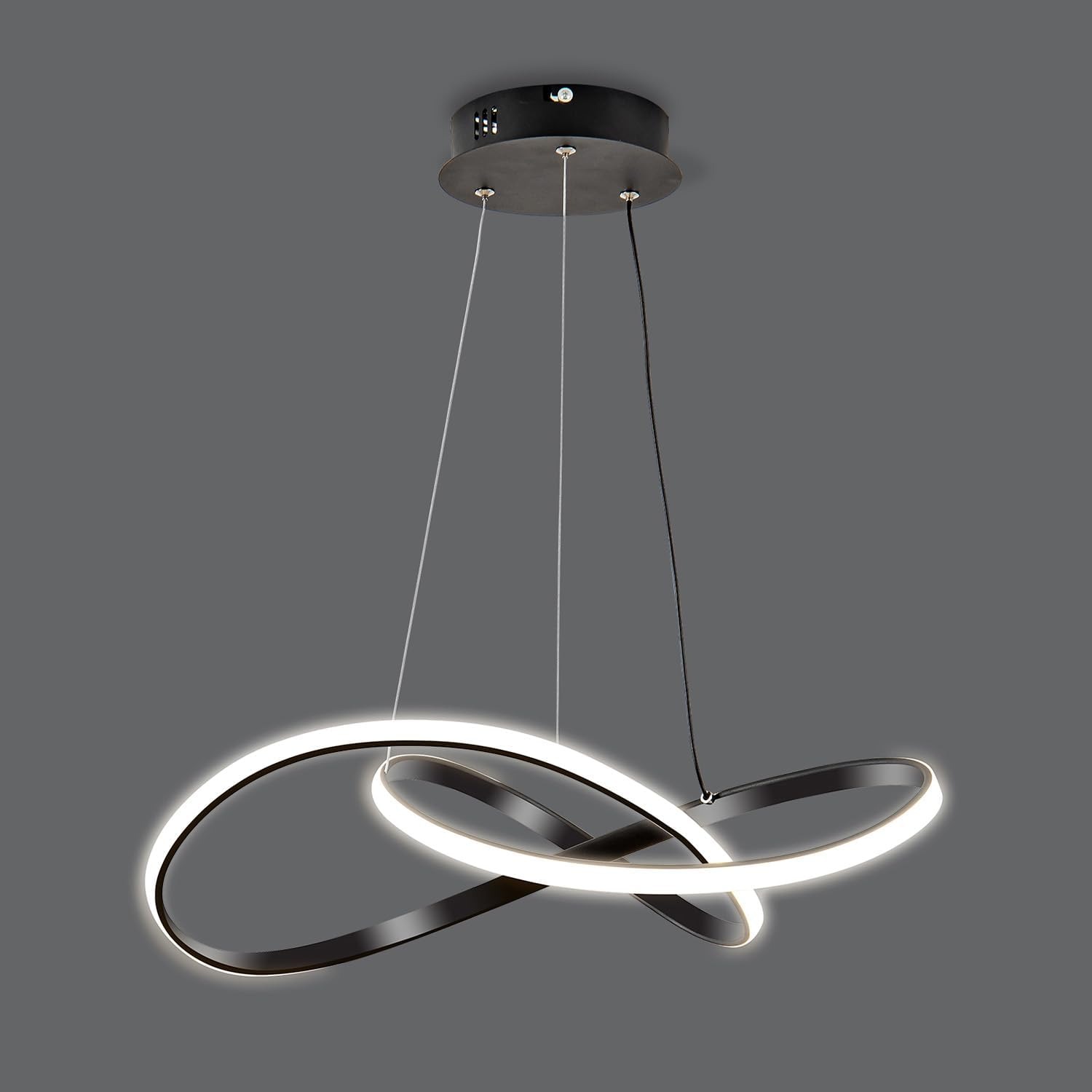
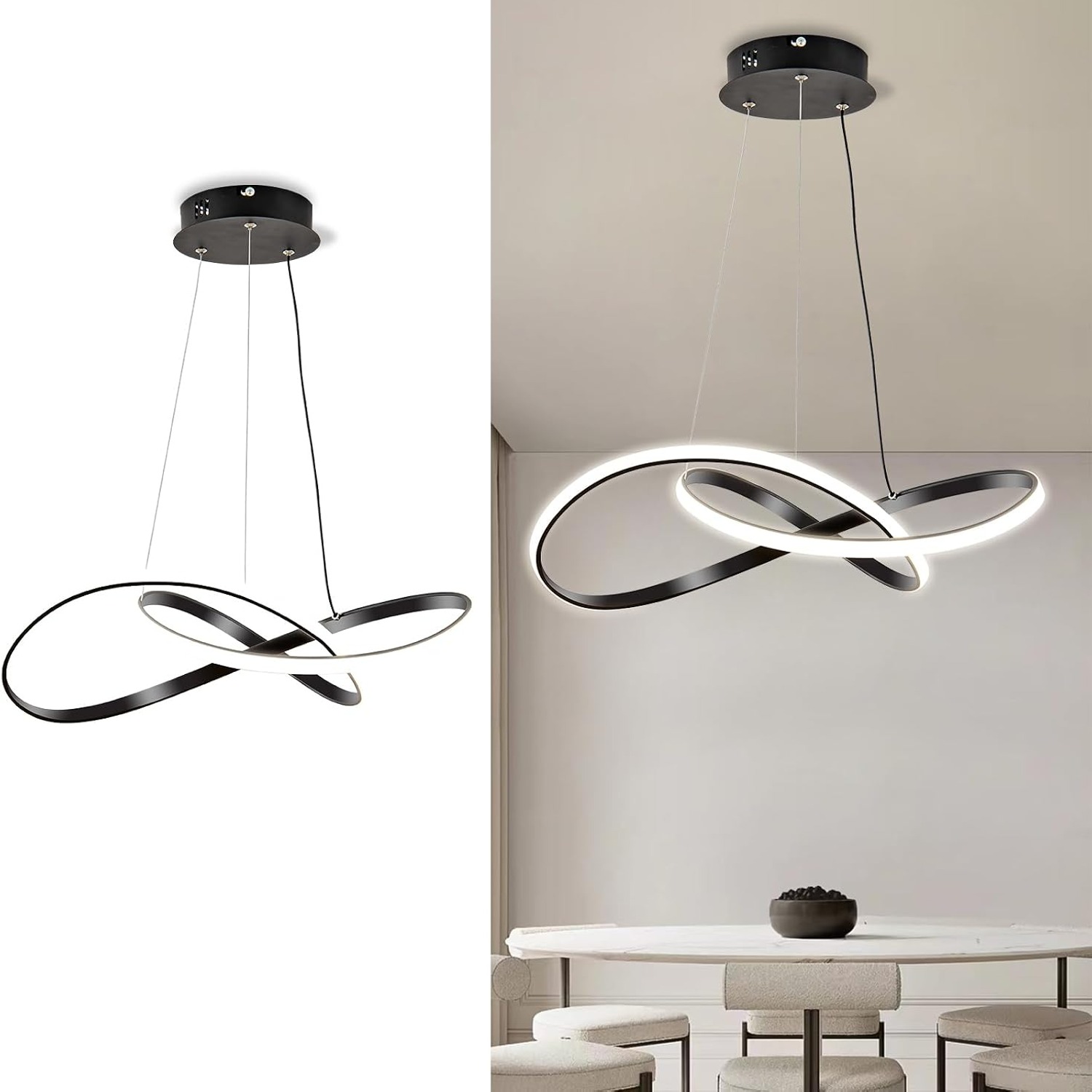
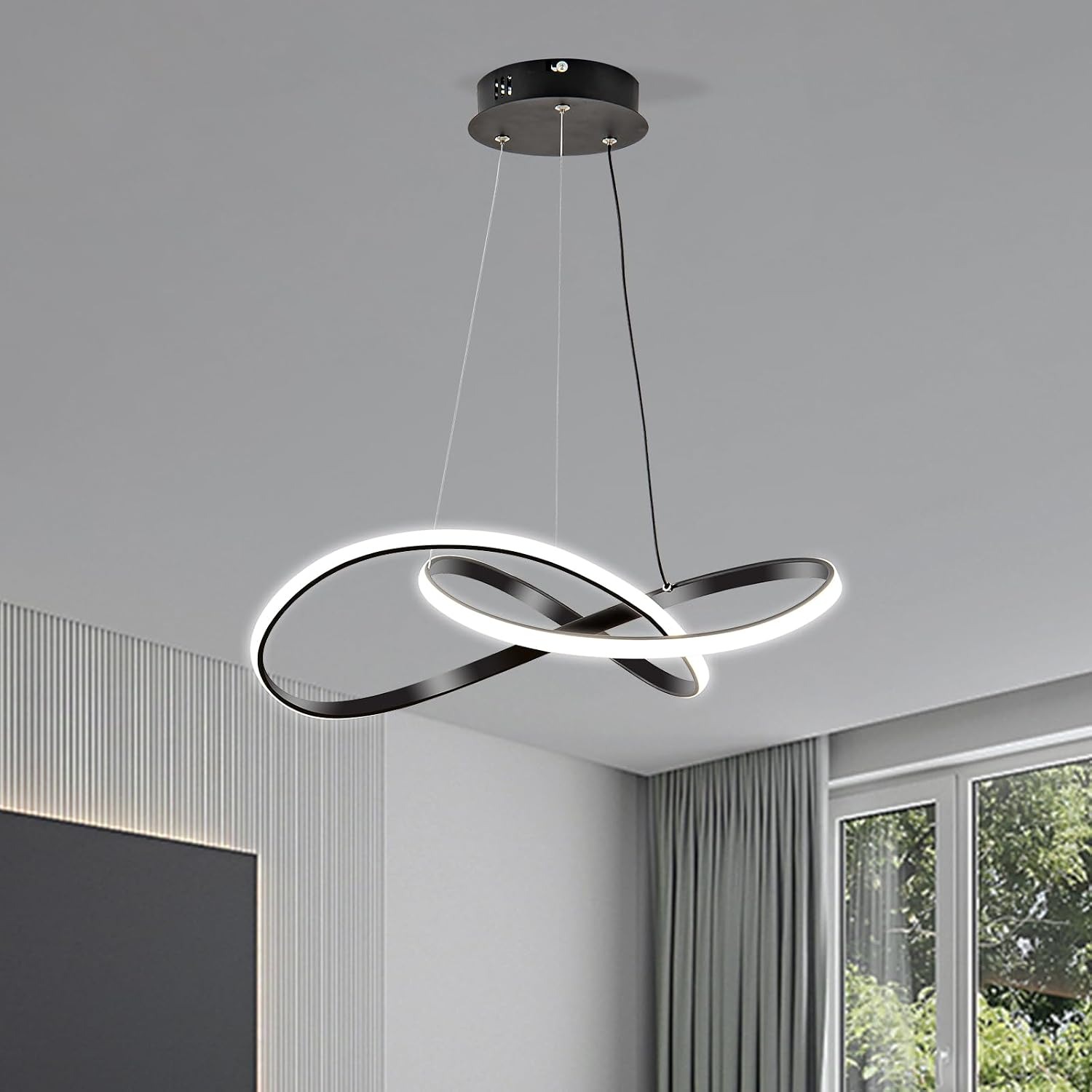
A ring pendant is a straightforward fix. It hangs down into the room, so your eye reads it as an object rather than a utility. And because the shape is open rather than solid, it adds interest without blocking light or making the ceiling feel lower.
What this light actually does
Strip away the design for a second. This fixture has one integrated LED source drawing 10 watts and producing 2400 lumens at 4000K.
Lumens are the number that matters for brightness. Watts tell you what it costs to run. 2400 lumens from 10 watts is the kind of efficiency that only became normal once LEDs took over, and it means you can leave this on all evening without thinking about the bill.
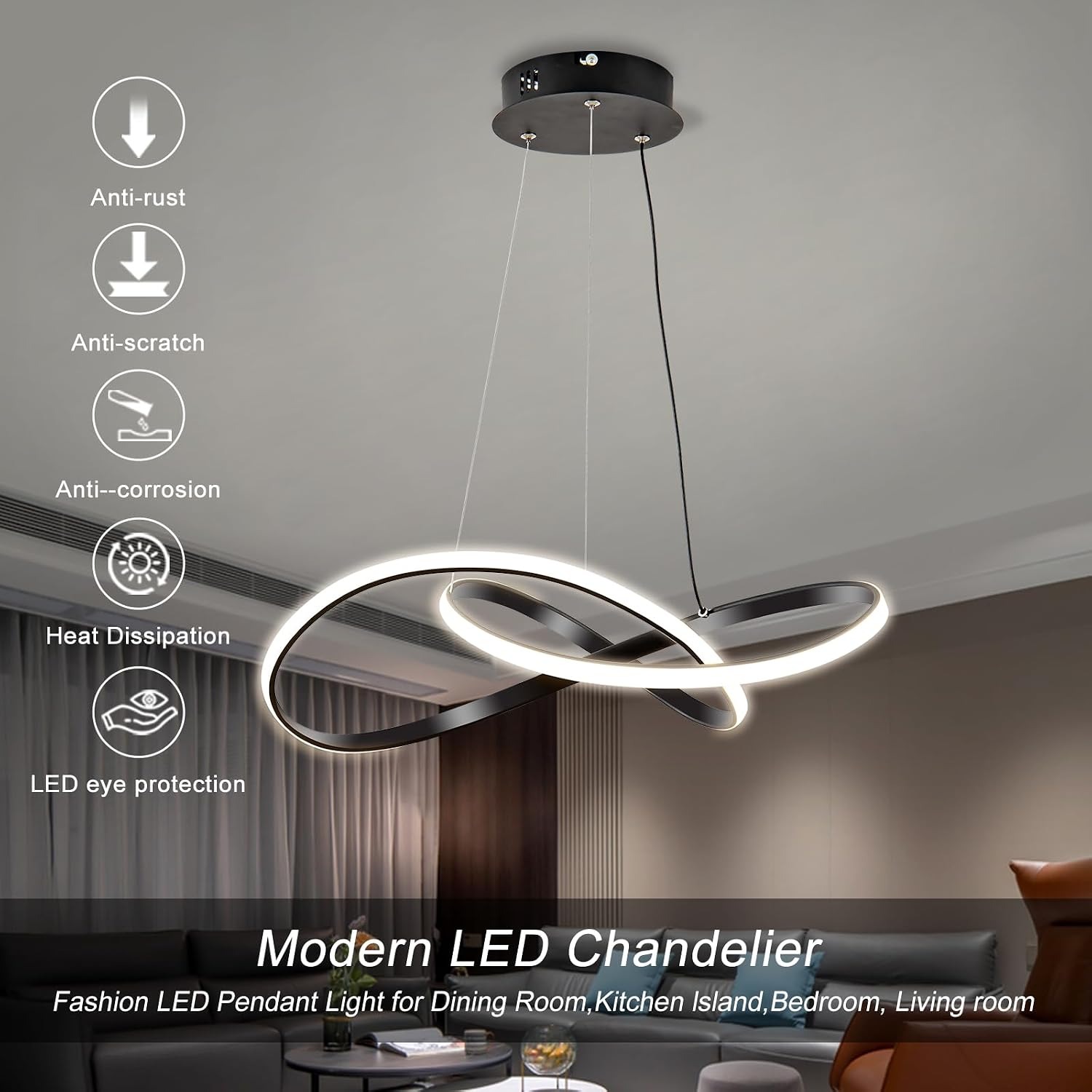
The 4000K figure is the color of the light. Lower numbers go orange, higher numbers go blue. At 4000K you land on neutral white, which is why it shows up so often in kitchens and dining rooms. Food looks right. Paint colors look right. Nobody squints.
The maker also describes the output as flicker-free with anti-glare treatment. That sounds like marketing until you have sat under a cheap LED for two hours and come away with a headache. Steady light is worth paying attention to in any room where people linger.
The height question
This is where most pendant purchases go wrong, and it is the main reason to look closely at the cord.
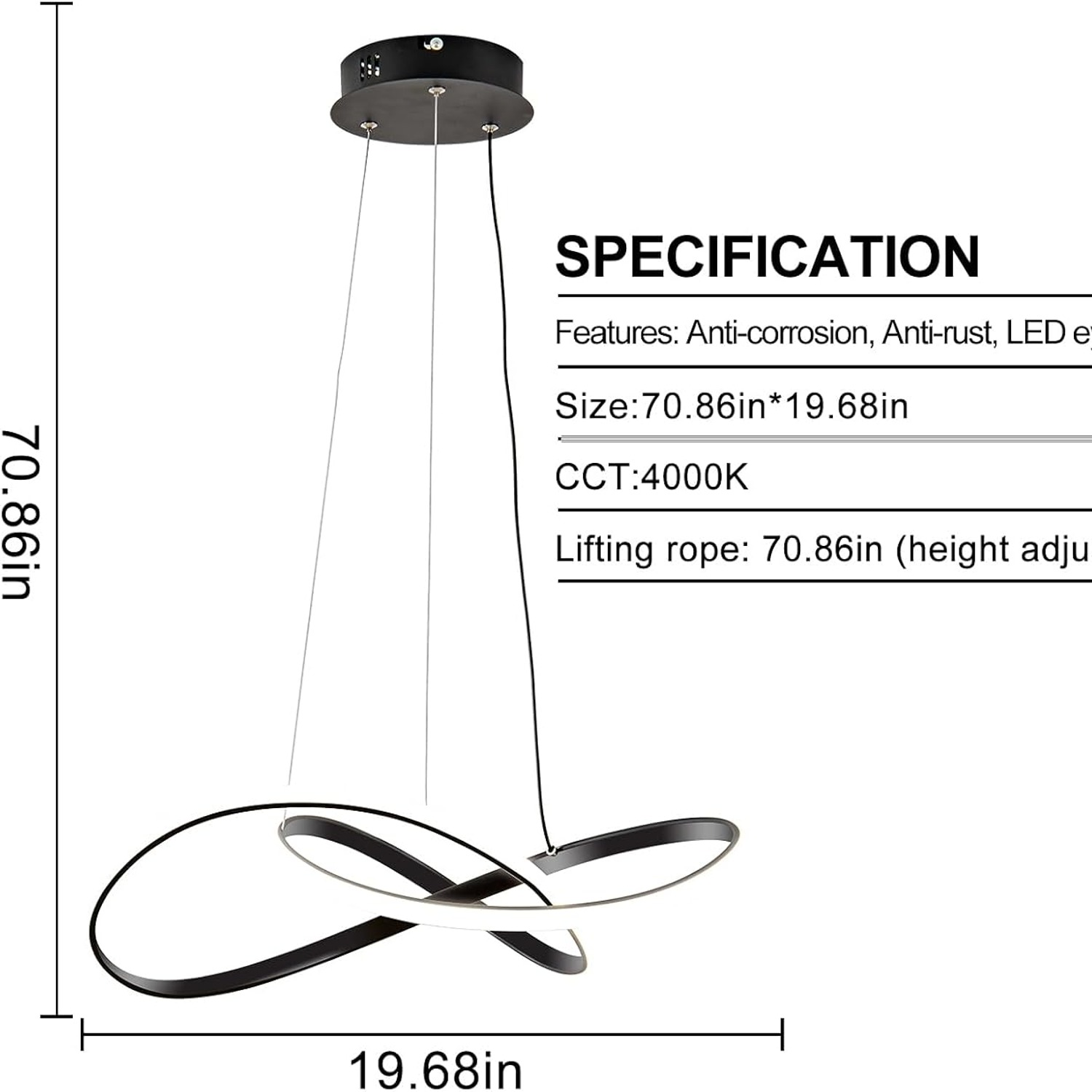
The hanging cord here retracts and extends to a maximum of 70.86 inches. That is a lot of range. In a standard room you will use a fraction of it and coil or shorten the rest. In a room with a high ceiling, a stairwell void or a vaulted roofline, that extra length is the difference between a fixture that looks placed and one that looks stranded up near the plaster.
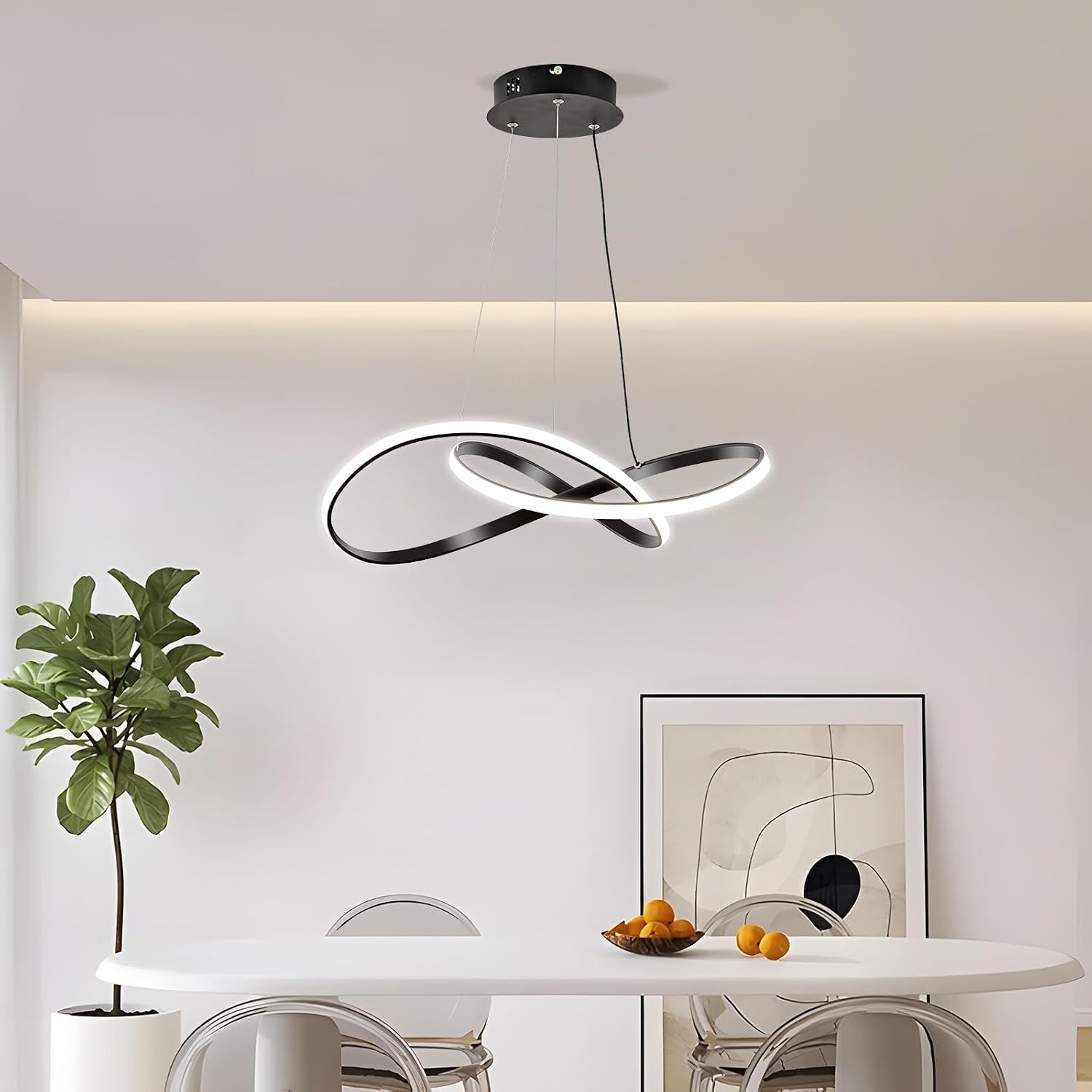
For a dining table, a useful starting point is around 75 to 90 cm from the tabletop to the bottom of the fixture. Hang it there and you light the table properly without putting the ring at eye level for anyone sitting opposite. Sit down and check. Standing up and eyeballing it gives you the wrong answer every time.
Over a kitchen island the logic is similar, though you may want it slightly higher so it does not interfere with someone working at the bench.
Sloped ceilings deserve their own mention. Fixed-rod pendants fight an angled ceiling, because the rod follows the slope and the fixture ends up tilted or at a strange height. A cord does not have that problem. You set the drop, the fixture hangs level, done.
Who this suits
The maker lists bedroom, living room, dining room, kitchen, nursery and home office as suited rooms, and suggests an indoor area of roughly 5 to 20 square meters.
In practice, the people who get the most from a fixture like this are:
- Anyone replacing a builder-grade ceiling disc in a dining room or kitchen and wanting one clear focal point
- People with a sloped or vaulted ceiling who have struggled to find a pendant that hangs correctly
- Renovators matching black hardware, black faucets or dark window frames and wanting the lighting to agree with the rest of the scheme
It is less suited to very large open-plan rooms, where one pendant of this size will not carry the whole space on its own. There it works better as part of a layered plan, paired with downlights or floor lamps.
It is also not for wet areas. The fixture is listed as indoor use only and not water resistant, which rules out bathrooms with open showers, laundries that get steamy, and anything outdoors even under cover.
How to judge build quality on a pendant
Three things tell you whether a light will still look good in five years.
The first is the frame material. This one uses matte aluminum. Aluminum resists rust and fading, and just as importantly it moves heat away from the LED. Integrated LEDs do not fail because the light wears out, they fail because heat cooks the driver and the chip. A frame that doubles as a heat sink buys you years.
The second is the finish. Matte black on a smooth aluminum body ages better than a painted gloss, because gloss shows every chip and every bit of dust. Matte hides both.
The third is weight, and this is counterintuitive. People assume heavy means good. For a ceiling fixture, light is often better. At 3.2 pounds this is easy to hold up with one hand while you connect the wiring, and it puts almost no load on the ceiling mounting. The shade component is iron in white, which gives the light-emitting section some substance.
Installation, honestly
The fixture arrives pre-assembled with mounting hardware and an instruction manual in the box. That removes the worst part of the job, which is fiddling with small parts on a ladder.
What is left is the usual ceiling-fixture sequence. Kill the power at the breaker, not just the wall switch. Remove the old fixture. Mount the bracket. Connect the wiring. Set the cord to your chosen height. Restore power and test.
If you have swapped a ceiling light before, this will feel familiar. If you have not, or if your local regulations require a licensed electrician for hardwired fixtures, book one. It is a short job for a professional and not worth the risk otherwise.
One practical note. Check the voltage. This is listed at 110 volts AC with an AC/DC power source. If your home runs on a different mains supply, confirm compatibility before you order.
Control is via a standard wall switch. No app, no remote, no pairing. Some people prefer that. If you want smart control, the usual route is a compatible smart switch on the circuit, which again is an electrician's job.
Looking after it
There is not much to do.
Dust the rings with a dry microfibre cloth every few months. If something needs more than that, use a barely damp cloth and dry it straight away. Avoid solvents, bleach and abrasive pads, all of which will dull a matte finish permanently.
Turn the power off and let the fixture cool before you touch it. LEDs run cooler than old bulbs but they are not cold.
Once a year, give the mounting bracket and the cord a quick look. Make sure nothing has worked loose and the drop is still where you set it. Do that with the breaker off.
Matching it to the rest of the room
Black pulls a scheme together when there is something else black in the room for it to talk to. Window frames, cabinet handles, faucets, a kitchen stool, a picture frame. One black object on its own can look accidental. Two or three read as a decision.
Against wood it works especially well, because the hard black edge gives the warmth of the wood something to push against. Against white or soft neutral walls it reads as graphic and clean.
If your room already runs warm, with brass fittings and yellow-toned lighting elsewhere, the 4000K output will feel noticeably crisper by comparison. That contrast can be good over a work surface and less good in a lounge where you want everything to melt together. Think about which effect you are after.
The short version
You are getting a sculptural ring pendant in matte black aluminum, 20 inches across, with a cord that adjusts to just under 71 inches so it suits flat and sloped ceilings alike. The single integrated LED gives 2400 lumens of flicker-free 4000K neutral white from 10 watts, which is the right amount of light for a dining table, a kitchen island or a medium-sized living room.
It weighs 3.2 pounds, arrives pre-assembled with mounting hardware and a manual, and runs from a plain wall switch on 110 volts AC. It is indoor use only and not water resistant.
Measure your ceiling height, decide how far down you want it to hang, and check your voltage. Those three things settle it.