
The complete guide
How to Choose a Vintage Gold Chandelier That Actually Fits Your Room
The problem with most ceilings
Walk into almost any room and look up. There is usually a flat disc of plastic or a bare bulb doing the absolute minimum. It lights the floor, it throws hard shadows under people's eyes, and it adds nothing to the look of the space. You can spend a lot of money on furniture and paint and still end up with a room that feels unfinished, and the ceiling is almost always the reason.
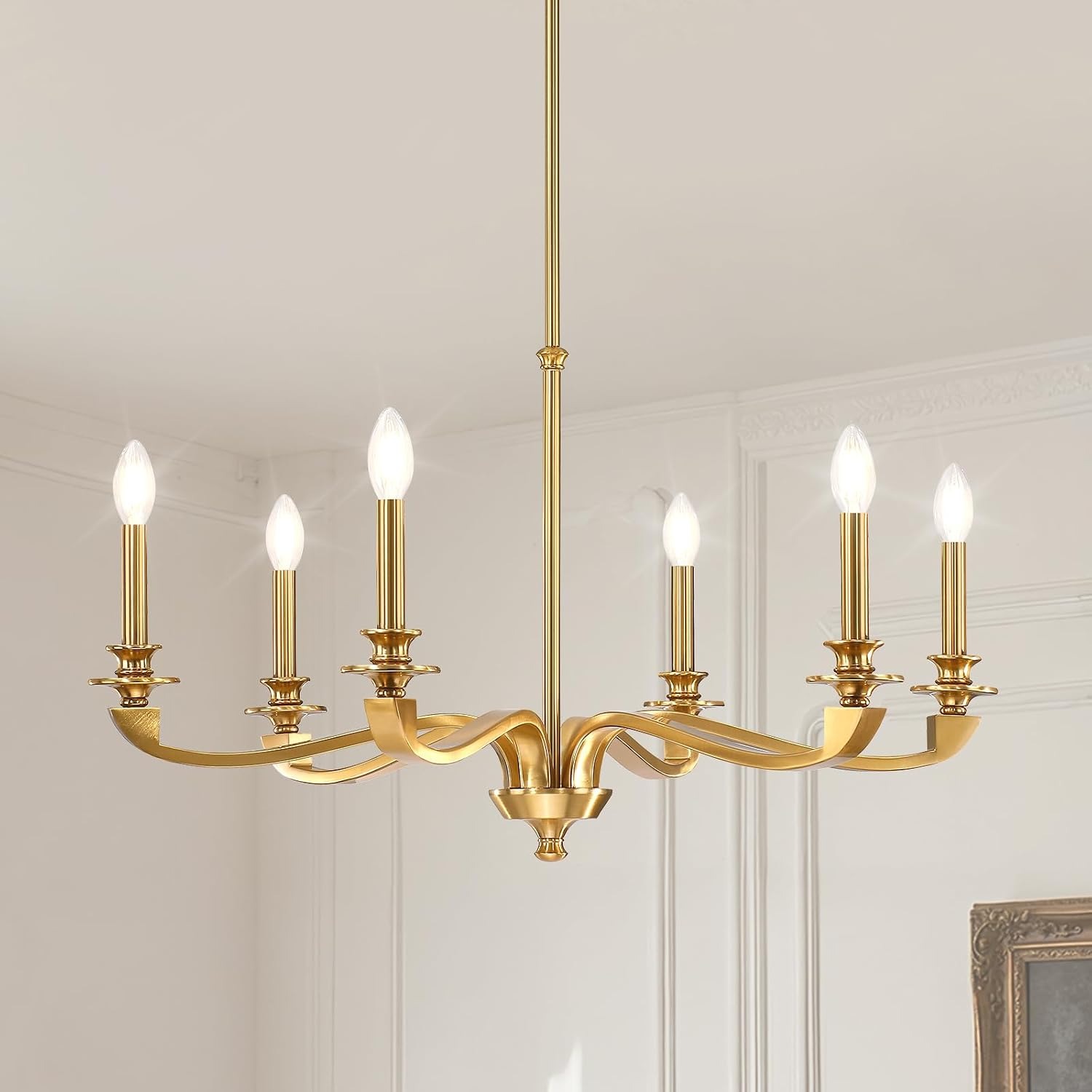
A chandelier solves two problems at once. It fills the empty vertical space above head height, and it changes how the light moves. A vintage gold chandelier with candle-style arms sends light outward from six separate points rather than down from one. That softens shadows, makes faces look better at a dinner table, and spreads a warmer glow across walls instead of hammering the floor.
How a candle chandelier actually works
The design is old, and that is the point. Before electricity, chandeliers held real candles on upward-facing arms. The light sat high, flickered gently, and reached the walls. Electric versions kept the shape because the shape works.
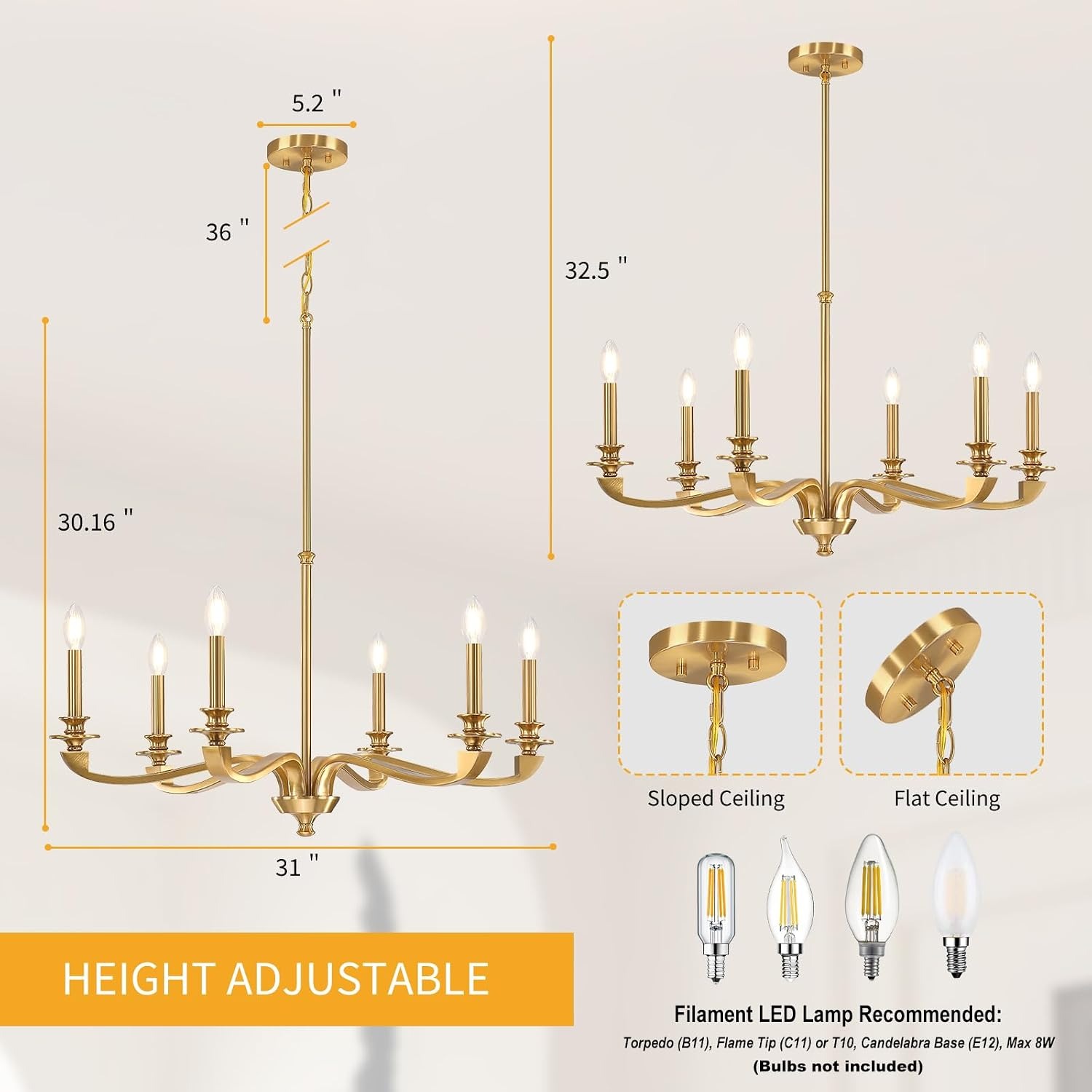
On this fixture there are six arms arranged around a round frame, each with an E12 candelabra socket rated to a maximum of 60 watts. The frame is painted metal in a gold finish, 31.5 inches across and 32.5 inches tall. Bulbs are not given by the maker, which gives you full control over the result. Six warm white LED candle bulbs at a modest output give you the relaxed evening look. Swap in brighter ones and the same fixture becomes genuinely useful task lighting for a kitchen island or an office.
Because the sockets face upward, you see the bulbs. That means bulb choice matters more than it does under a shade. Clear glass candle bulbs with a visible filament look right with this style. Frosted bulbs give a softer, less sparkly result and are kinder if the chandelier hangs at eye level on a stairway.
The fixture runs on 120 volt AC and mounts to a ceiling point. Height is adjustable, which matters more than most people expect. The difference between a chandelier that looks deliberate and one that looks wrong is usually eight inches of chain, not the fixture itself.
Who this suits
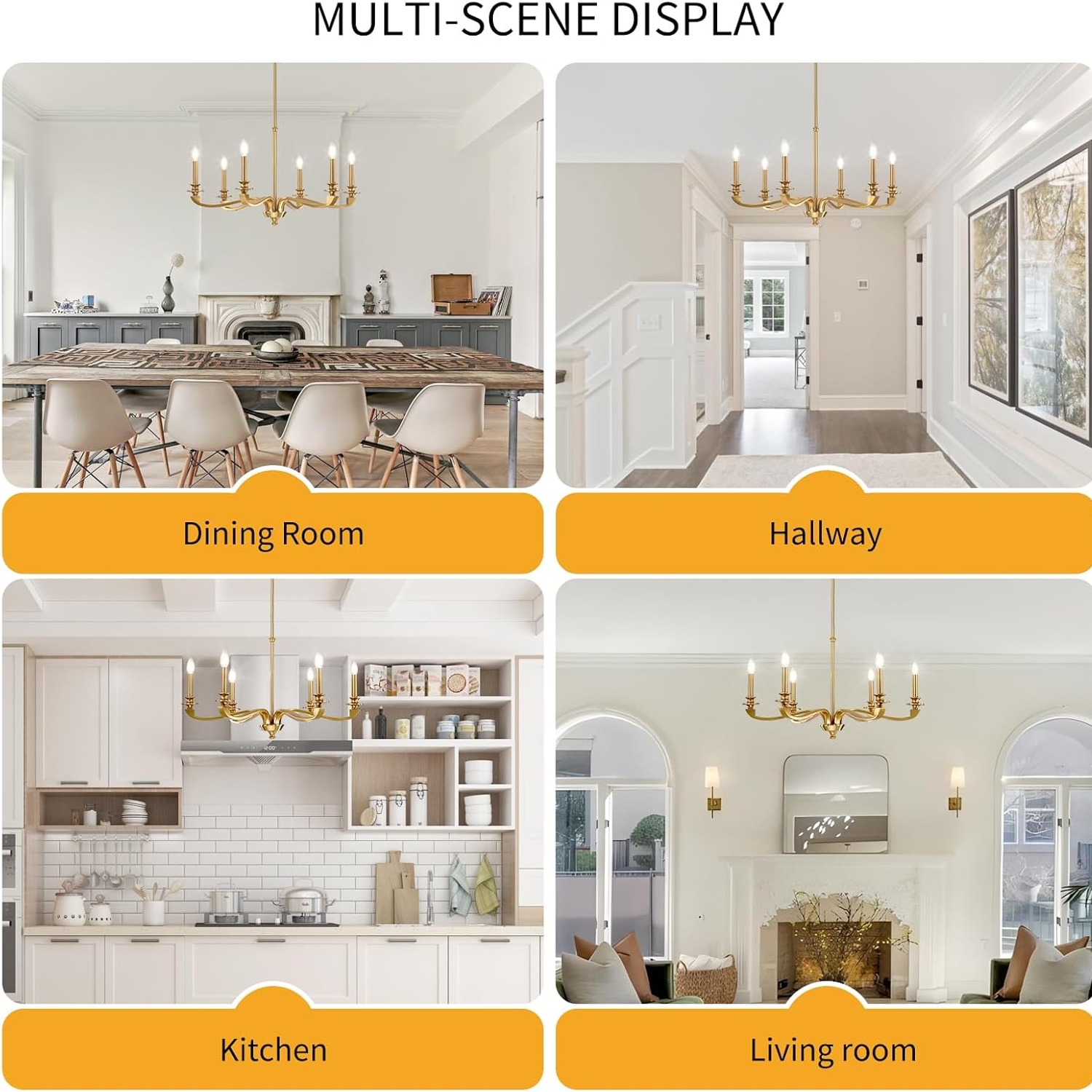
This is a good fit if you have a dining room, entryway, living room or stair void that feels flat. It is also a straightforward upgrade in a bedroom where a basic flush fitting has been sitting since the house was built.
It suits people who want the antique brass ceiling light look without going full period reproduction. The lines here are clean. The gold finish gives warmth, the candle arms give the traditional shape, and the overall effect sits comfortably in a modern room, a farmhouse kitchen or something in between.
It is less suitable if your ceiling is very low and the fixture would hang over a walkway, or if you need something rated for a bathroom or outdoor use. This one is specified for indoor use. And if you dislike seeing bulbs, a shaded pendant will suit you better.
Getting the size right
Size is where most people go wrong, so it is worth a few minutes with a tape measure.
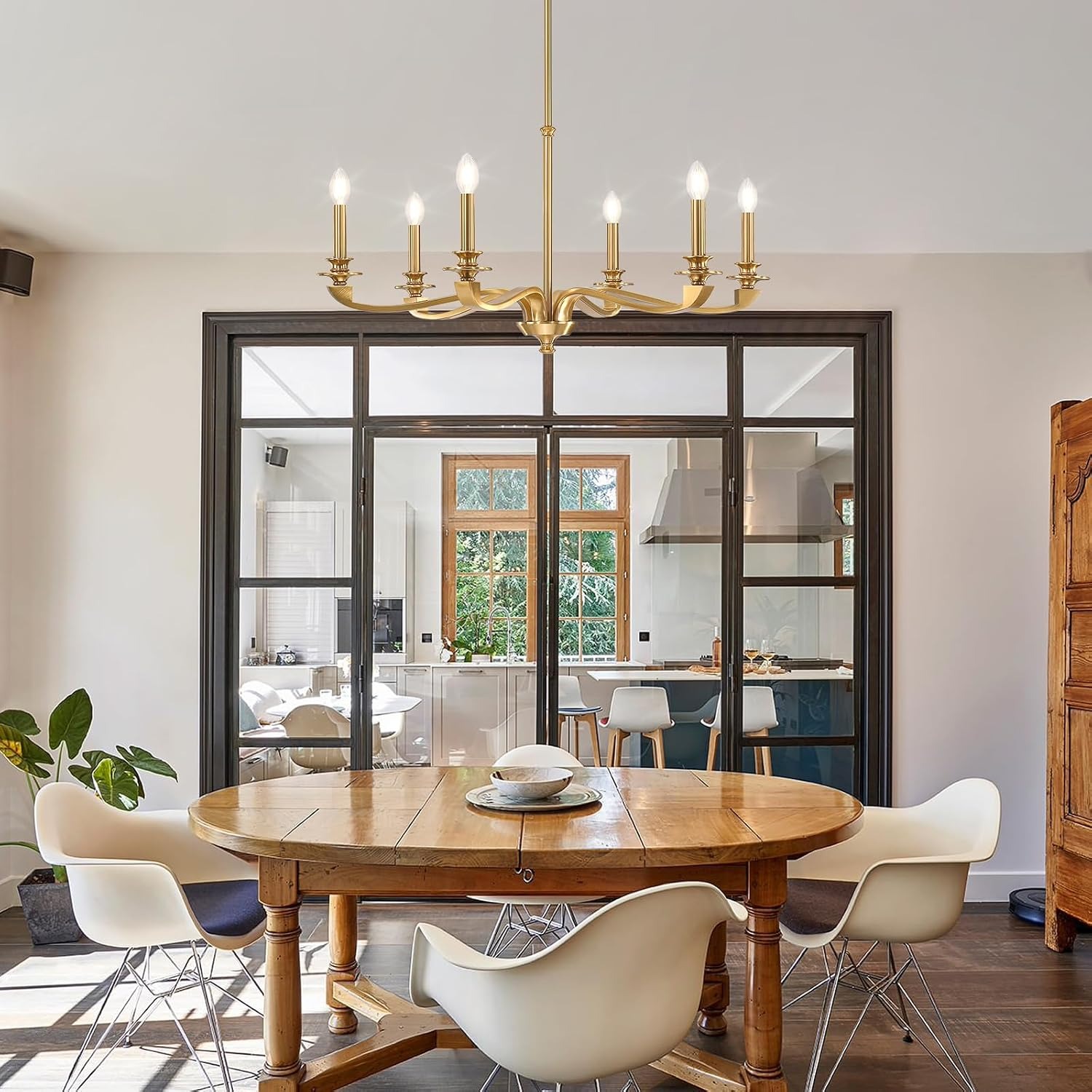
A rough starting point for a dining room chandelier is a diameter of about half to two thirds the width of your table. A 31.5 inch fixture works comfortably over a table around 48 to 60 inches wide. Over something much narrower it starts to overhang awkwardly; over a very long table you may want two smaller fixtures instead.
For a room rather than a table, a common method is to add your room's length and width in feet, then treat that number in inches as a reasonable chandelier diameter. A 14 by 16 foot room gives you 30, which lands almost exactly on this fixture. That rule is not law, but it stops people buying something far too small, which is the most common mistake.
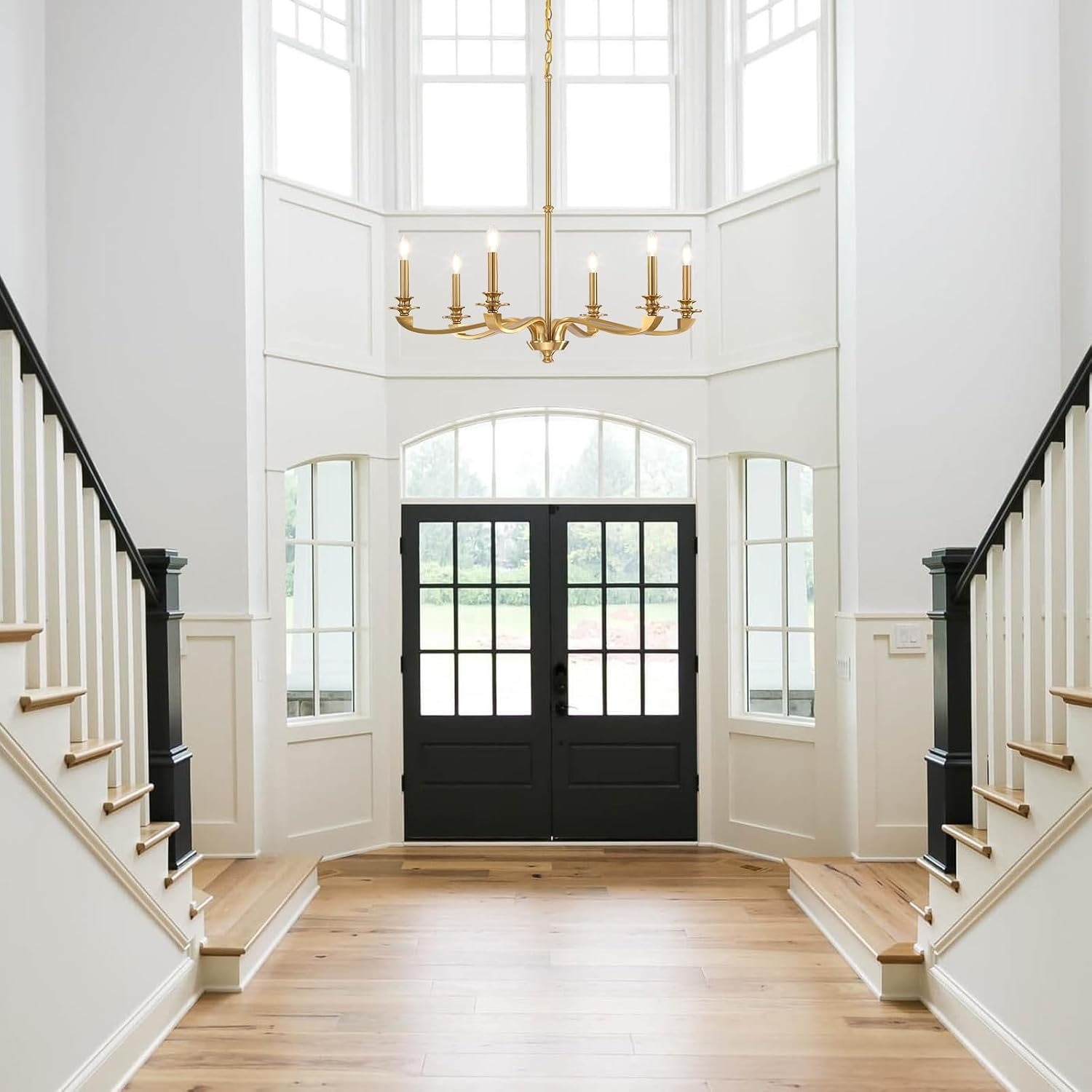
Height is the other half of the calculation. Over a dining table, aim for roughly 30 to 36 inches between the tabletop and the bottom of the fixture. In a hallway or entry, keep at least seven feet of clearance underneath so nobody walks into it. In a stairwell with a double-height void, you can afford to hang it lower and let it become the main feature, ideally visible from both floors.
Choosing bulbs
Six bulbs is a decision, not a detail. Here is what actually changes the result.
Color temperature sets the mood. Around 2700K reads as warm and relaxed, which is what most people want in a dining room or bedroom. Around 3000K is slightly crisper and works well in kitchens. Anything above that starts to feel clinical under a gold finish.
Brightness is the second lever. Six bulbs at 400 lumens each gives you a soft, atmospheric room. Six at 800 lumens each gives you a well-lit working space. If you cannot decide, buy dimmable bulbs and fit a compatible LED dimmer, then set the level once and forget about it.
Shape matters too. Torpedo or flame-tip candle bulbs suit the candle style chandelier form. Round globe bulbs give a more contemporary look if you want to pull the design slightly away from traditional.
Installation and safety
The fixture weighs 11.23 pounds. That is light as chandeliers go, but a ceiling box that has been holding a plastic disc for twenty years is worth checking before you trust it with anything heavier. The box should be rated for a hanging fixture and fixed to a joist or a proper brace.
Isolate the circuit at the breaker, not just the wall switch, and test with a voltage tester before touching any wiring. An instruction manual comes in the box, and the multi-directional socket design makes aligning the arms easier during assembly. A second person holding the frame while you connect the wires turns a frustrating job into a ten minute one.
If mains wiring is not something you are comfortable with, or if local regulations require a licensed electrician for hard-wired fittings, book one. It is usually a short visit and it removes all doubt.
Looking after it
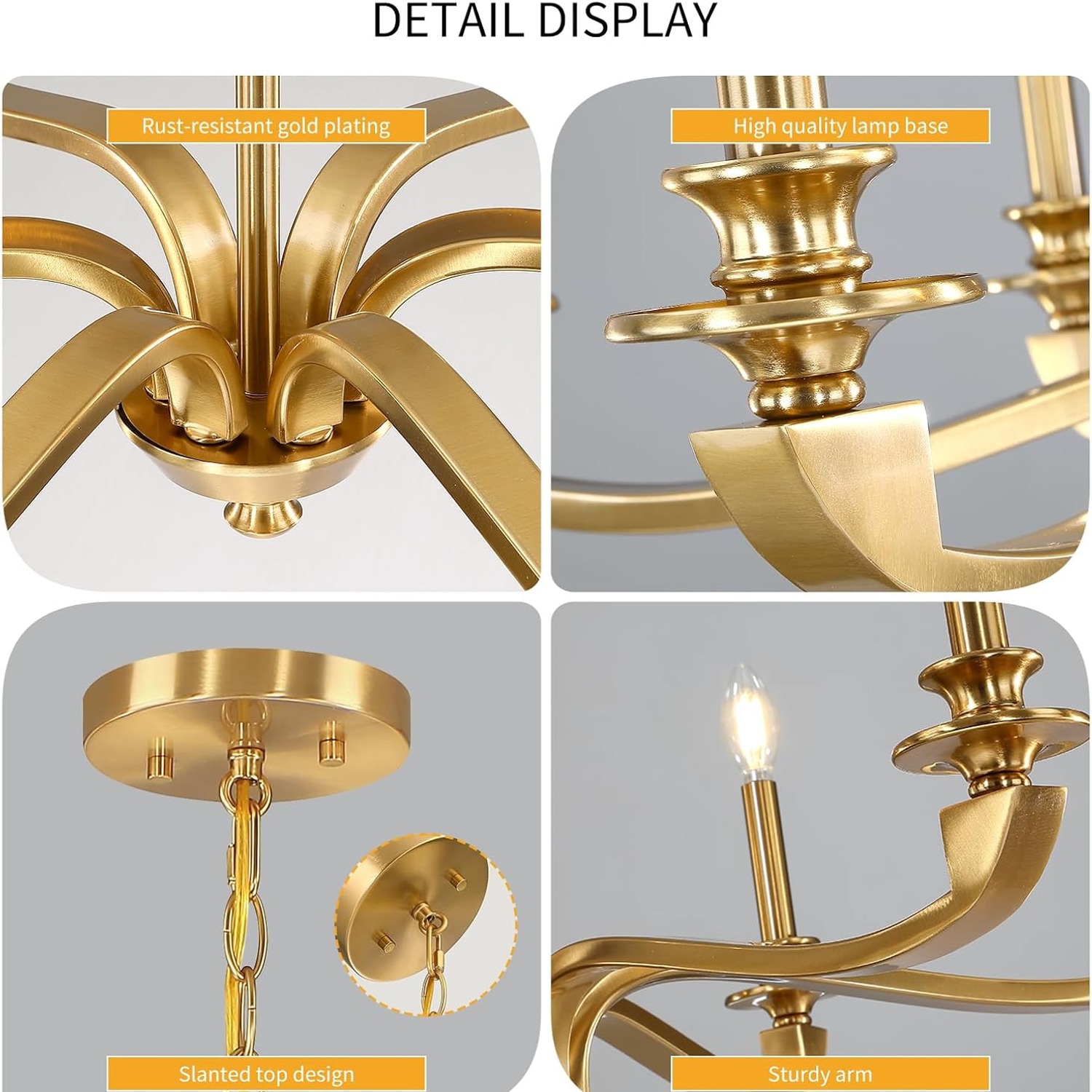
Painted metal finishes stay looking good with very little effort, as long as you are gentle. Turn the fixture off and let the bulbs cool first. Dust the arms and frame with a soft dry cloth, which is all most chandeliers ever need. For anything sticky, a barely damp cloth followed straight away by a dry one does the job.
Do not use abrasive pads, solvents or spray cleaners. Spray in particular is a bad idea near sockets and wiring, since the liquid goes where you cannot see it. The manufacturer describes anti-rust construction, which helps in humid rooms, but keeping moisture off the finish is still the simplest way to preserve it.
Every few months, give it a once over. Check the bulbs are seated firmly, the arms sit straight, and the mounting hardware is still tight. Doors slamming and footsteps upstairs loosen things slowly.
The short version
A 31.5 inch round gold candle chandelier with six E12 sockets, a painted anti-rust metal frame, adjustable height and a 120 volt ceiling mount. Bulbs are not included, which lets you set the brightness and tone yourself. It suits dining rooms, entryways, living rooms, bedrooms and stairwells, and it is listed for indoor use only.
Measure your table and your ceiling before you order. Get those two numbers right and this is the kind of fixture that makes a room look considered rather than just furnished.