


The complete guide
How To Choose A Black Farmhouse Chandelier For Your Dining Room
The problem with most dining room lighting
Walk into a lot of homes and the dining room is lit by a single flush fixture somewhere near the middle of the ceiling. It was probably there when the house was built. It throws light straight down from eight or nine feet up, the table sits slightly off center from it, and the result is a hard pool of brightness in one spot and shadows everywhere else. Food looks flat. Faces look tired. Nobody lingers at the table.
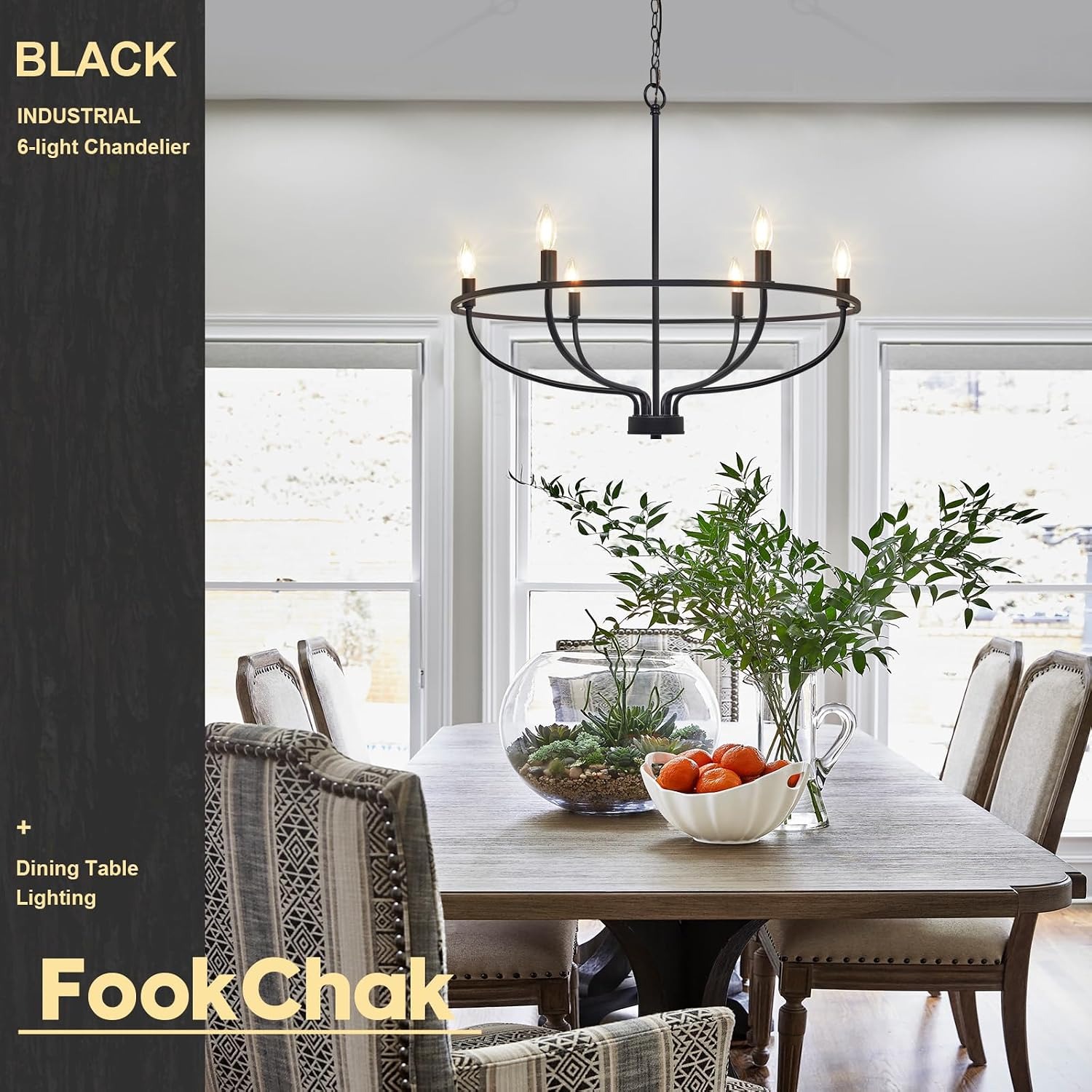
A chandelier solves this in a fairly simple way. It brings the light source down closer to where you actually need it, and it breaks that light into several points instead of one. Six small bulbs spread across a 29 inch frame cover a table far more evenly than one bright bulb nine feet up. The light is softer because it is coming from more directions, and because each bulb is doing less work.
The second thing it does is give the room a center. Dining rooms are often just a table in a box. A fixture hanging over the table tells your eye where the room begins and ends. That is why a black farmhouse chandelier has become such a common choice even in homes that are not remotely rustic. It is decoration that happens to be useful.
How this chandelier works
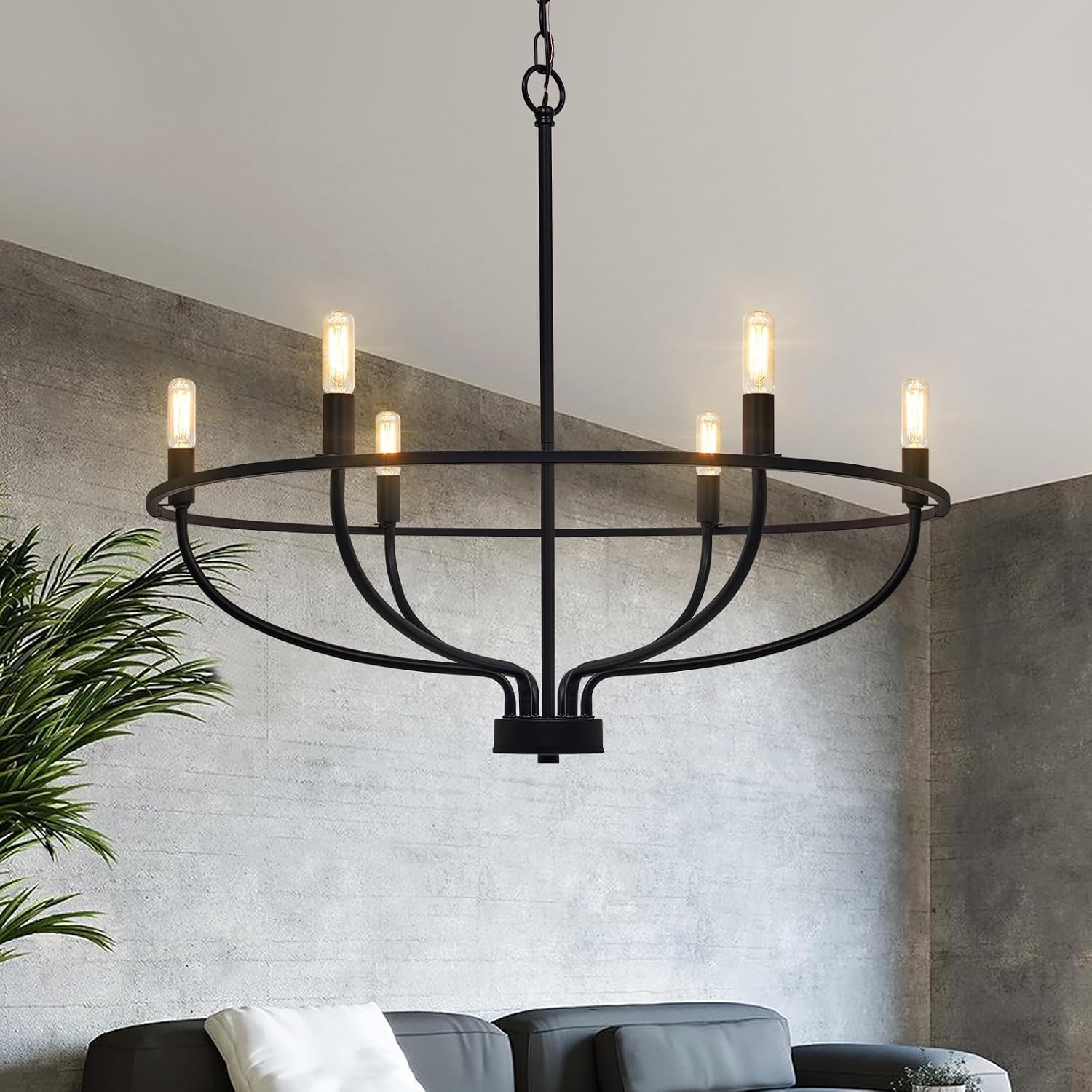
This is a six light fixture built around a round metal frame, with arms curving up and out in what the maker calls a bouquet shape. The whole thing is metal, finished in painted black using an anti-rust painting process. It measures about 28.54 inches across and 25.81 inches tall.
Each arm holds an E12 candelabra socket, rated to 60 watts. The fixture carries a 4800 lumen rating and runs on 120 volt AC. It is a ceiling mount fixture, hard-wired, hanging from a 36 inch adjustable chain.
Bulbs are not included. People sometimes see that as a negative, but it is genuinely the better arrangement. The bulb you choose changes the character of the fixture more than anything else about it. Clear filament LED candles make the arms look delicate and give you that warm amber glow. Frosted candles soften the light and cut glare if you sit beneath it most evenings. Cool white bulbs will make the same chandelier look modern and a bit clinical. Same frame, three very different rooms.
The fixture is listed as dimmable. To use that, you need dimmable bulbs and a dimmer that works with them. LED dimming is fussier than old incandescent dimming, so read the bulb box rather than assuming. If your wall switch is a plain push button type and you do not want to rewire, smart E12 bulbs give you dimming through an app instead.
Who it suits
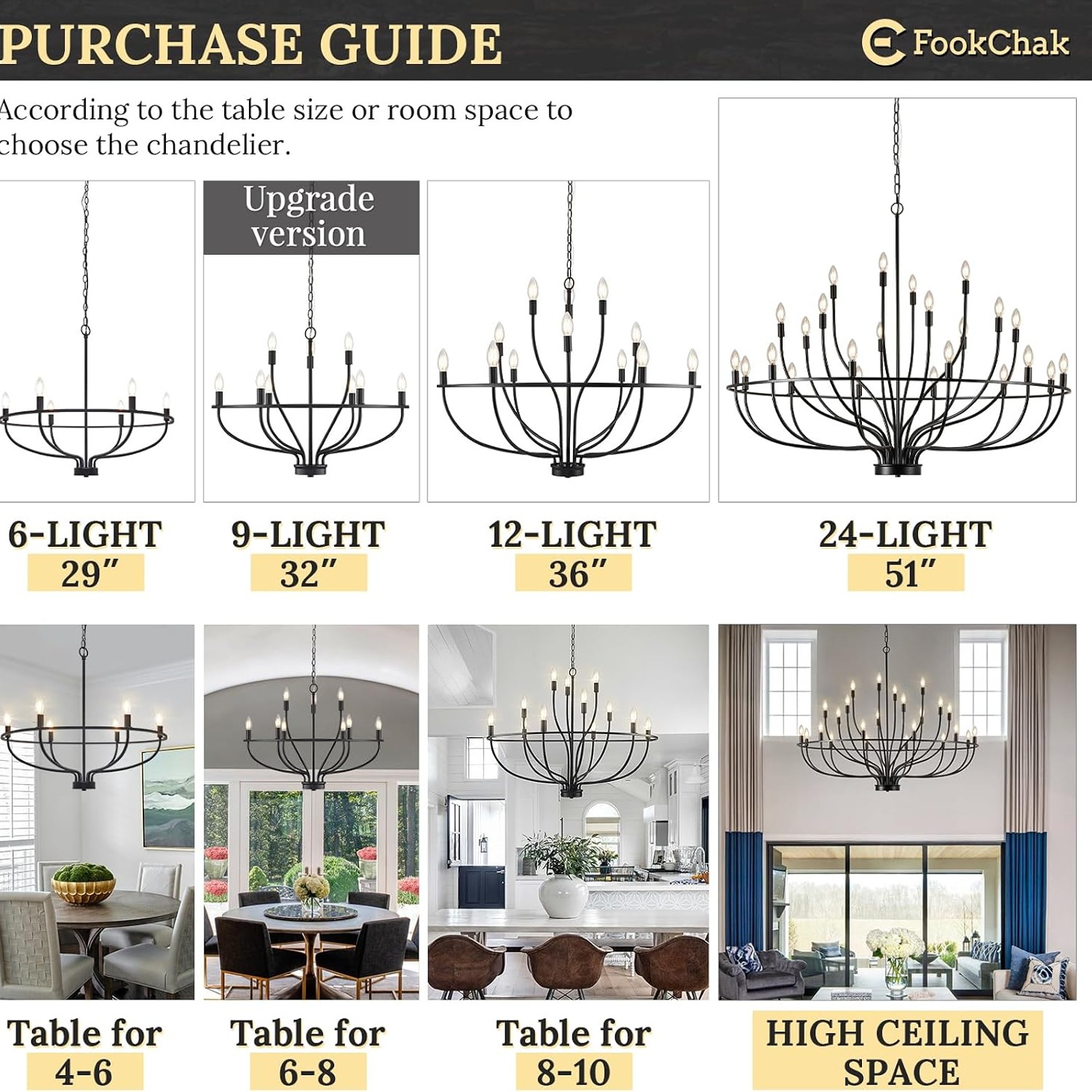
This one works best over a dining table between roughly four and six feet long. At 29 inches wide it has presence, and in a small room it will dominate. That can be exactly what you want in a narrow dining nook, where a bold fixture makes the space feel considered rather than cramped. But measure first.
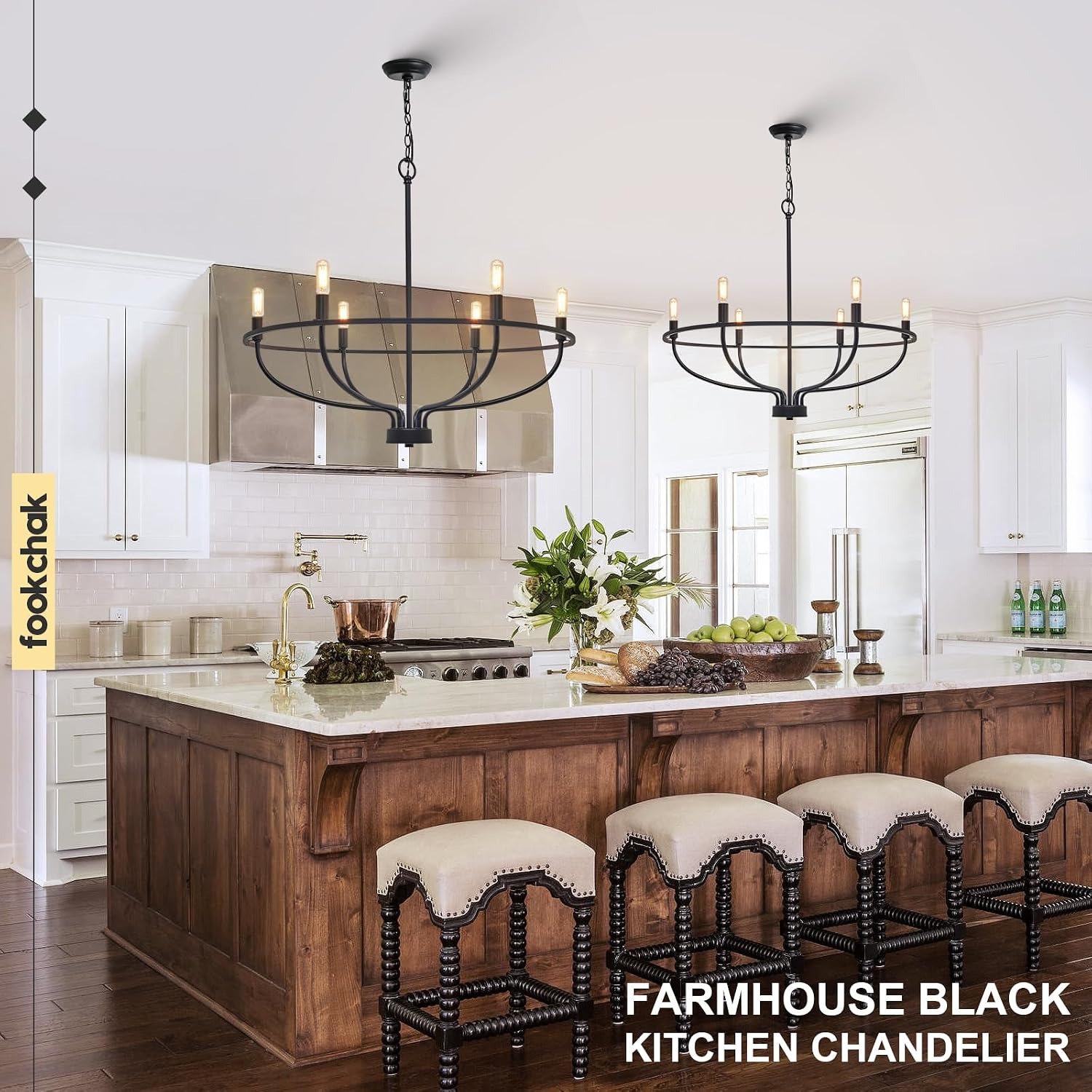
It also makes sense over a kitchen island, in an entry hall, in a living room with a decent ceiling, or in a stairwell where the 36 inch chain lets it hang at a dramatic height. The maker's description covers bedrooms and home offices too, and both work if you match the bulbs to the job. Warm and dimmable in a bedroom. Brighter and neutral in an office.
Where it does not belong is anywhere damp. It is rated indoor only and is not water resistant. That rules out covered porches, outdoor dining areas and bathrooms with a lot of steam. It also rules out mounting it directly above a kitchen sink where steam rises constantly.
Shops, restaurants and small hospitality spaces are listed as suitable uses, and a row of these over a long counter is a familiar look. Just check your local commercial wiring rules before you install anything in a business premises.
Choosing the right size and height
Two numbers matter when you are picking a chandelier for a dining room light fixture: width and hanging height.
For width, a common rule is to take the width of your table and subtract about twelve inches. A 40 inch wide table suits a fixture around 28 inches, which puts this one right in range. Another approach is to add your room's length and width in feet, then treat that number as inches of fixture diameter. A 12 by 14 foot room gives you 26 inches, again close to this fixture.
For height, aim for roughly 30 to 36 inches between the tabletop and the bottom of the chandelier. That is low enough to feel intimate and high enough that two people sitting opposite can see each other. If your ceiling is higher than eight feet, add a few inches of drop for every extra foot of ceiling. The 36 inch chain gives you room to play with, and links come off easily if you need it shorter.
Sloped ceilings are the other common worry. This fixture handles them. The chain and canopy let the chandelier hang vertically even when the ceiling above is at an angle, which matters in loft conversions, barn-style rooms and older cottages where flat ceilings are rare.
Getting the bulbs right
Six bulbs is a lot of small decisions, so settle them in one go.
Buy all six identical, from the same brand and batch. Mixed bulbs in a single fixture are one of those things you cannot unsee once you notice the color difference. Stick to one color temperature. Around 2700K reads as warm and traditional, which suits the farmhouse shape. 3000K is a touch crisper and still comfortable. Anything above about 4000K starts to feel like an office.
Shape matters too. Flame-tip candles play up the traditional side of the fixture. Straight torpedo bulbs look slightly cleaner. Globe-shaped E12 bulbs give a more contemporary feel if you want to pull the chandelier away from the rustic end of things.
Stay within 60 watts per socket. With LED candles you will land well under that anyway, typically four to six watts each, which means the whole fixture draws less power than a single old-fashioned bulb.
Installation and care
The fixture ships in one box with an accessories kit and a user manual. It weighs about 7.73 pounds, which a standard fixture-rated ceiling box will support without extra bracing. The job itself is the usual sequence: kill the power at the breaker, remove the old fixture, fit the mounting bracket, connect the wiring, hang the chain, attach the canopy, then add bulbs.
If any part of that sentence made you uncomfortable, call an electrician. Many regions require a licensed professional for hard-wired ceiling work anyway, and for most of them this is a straightforward visit.
Care is easy. Turn the power off, let any bulbs cool, then dust the arms and frame with a dry microfibre cloth. A few times a year, wipe it with a cloth barely dampened with water and dry it right away. Avoid spray cleaners and abrasive pads. Painted finishes do not love solvents, and there is no reason to use them on a fixture that only ever collects dust. While you have the ladder out, check the canopy screws and chain links are still tight.
The short version
This is a 29 inch black metal chandelier with six E12 sockets, a 36 inch adjustable chain and a painted anti-rust finish, suited to flat or sloped ceilings indoors. Bulbs are not included, which means you get to decide whether it looks warm and rustic or crisp and modern. It fits tables in the four to six foot range, hangs about 30 to 36 inches above the tabletop, and arrives with the hardware and manual you need to put it up.
If your dining room has been lit by the same tired ceiling light since you moved in, this is the kind of change you notice every single evening.