
The complete guide
How to Choose a Ring Chandelier for a Tall Room
The problem with tall rooms
A double-height entry looks great in a floor plan. Then you move in, flick on the light, and realize the fitting near the ceiling is doing almost nothing for the space underneath it. All that vertical air sits unlit. The stairs feel darker than they should. Guests arrive and the first thing they see is a big empty volume with a small disc of light at the top.
It is a common mismatch. Standard ceiling fittings are designed for rooms about eight or nine feet tall. Put one in a sixteen foot foyer and it is working at twice the distance, which means less light where you need it and nothing visually filling the gap.
A ring chandelier solves both halves of that at once. The rings themselves occupy the vertical space, so the room reads as finished rather than unfinished. And because the light sources are spread down through the drop rather than clustered at the ceiling, the illumination lands lower, closer to where people actually walk.
How this one works
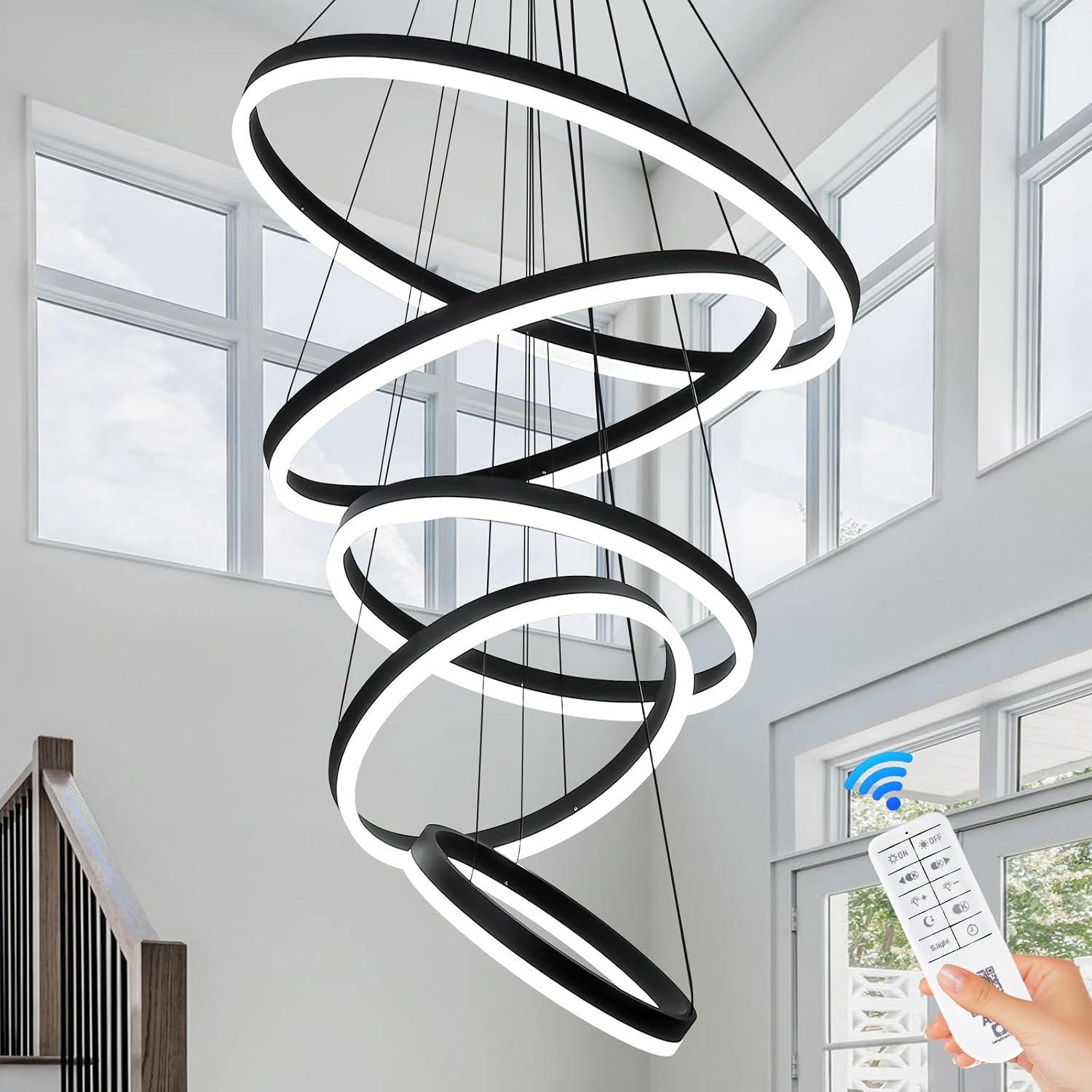
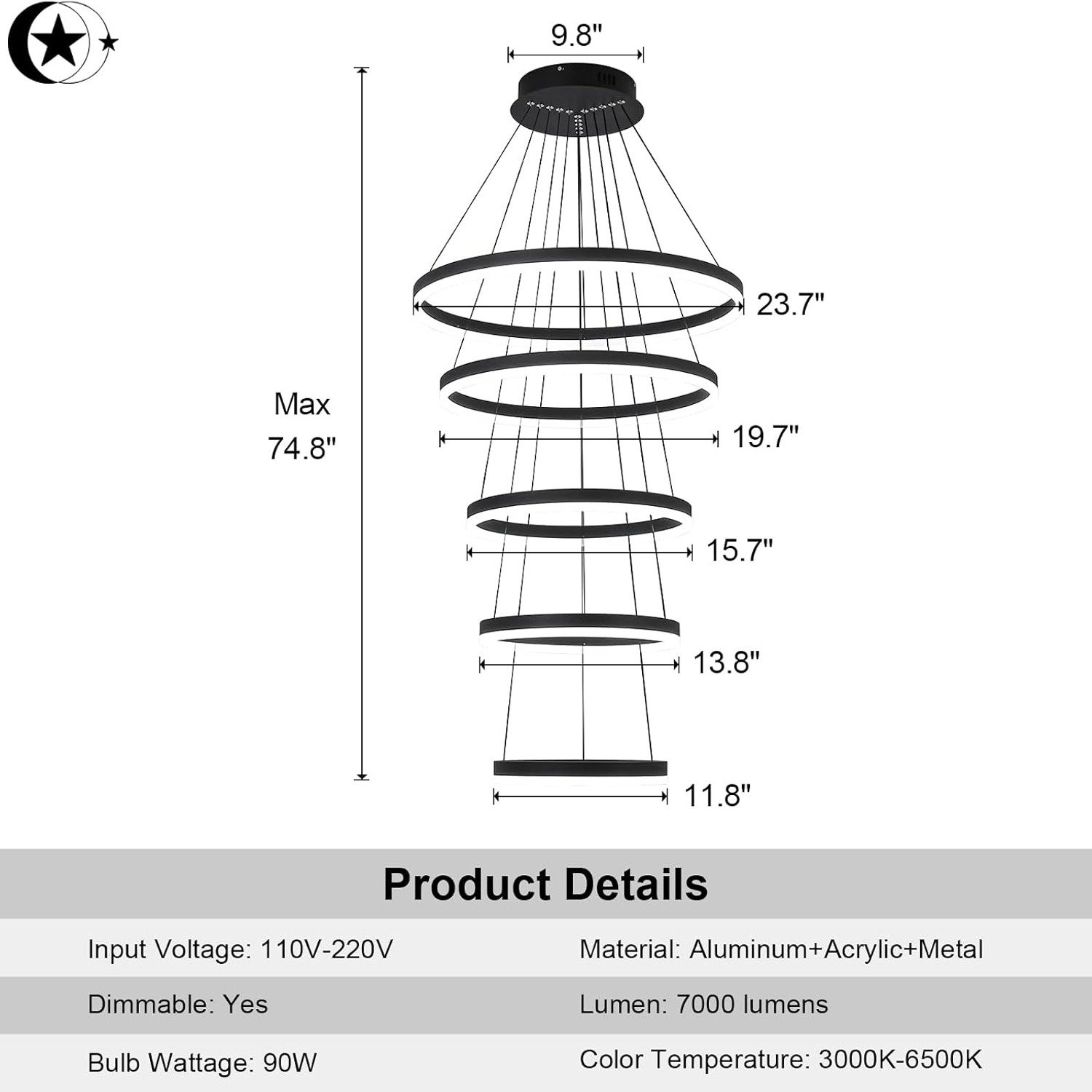
The fixture is five aluminum rings in graduated sizes, 11.8, 13.8, 15.7, 19.7 and 23.6 inches across, each with an acrylic diffuser and a painted black finish. They hang from a single canopy on individual cables.
The LED is integrated, meaning it is built into the rings rather than being a set of bulbs you screw in. Ninety watts of LED produces 7,000 lumens. For comparison, that is roughly what you would get from a cluster of several traditional bulbs, except it runs cooler and draws far less power.
Color rendering is above CRI 90, which is worth caring about. A lot of cheap LED lighting sits in the seventies, and in that range natural materials lose their depth. Oak looks flat. Terracotta looks brown. At CRI 90 and up, the colors in your space hold.
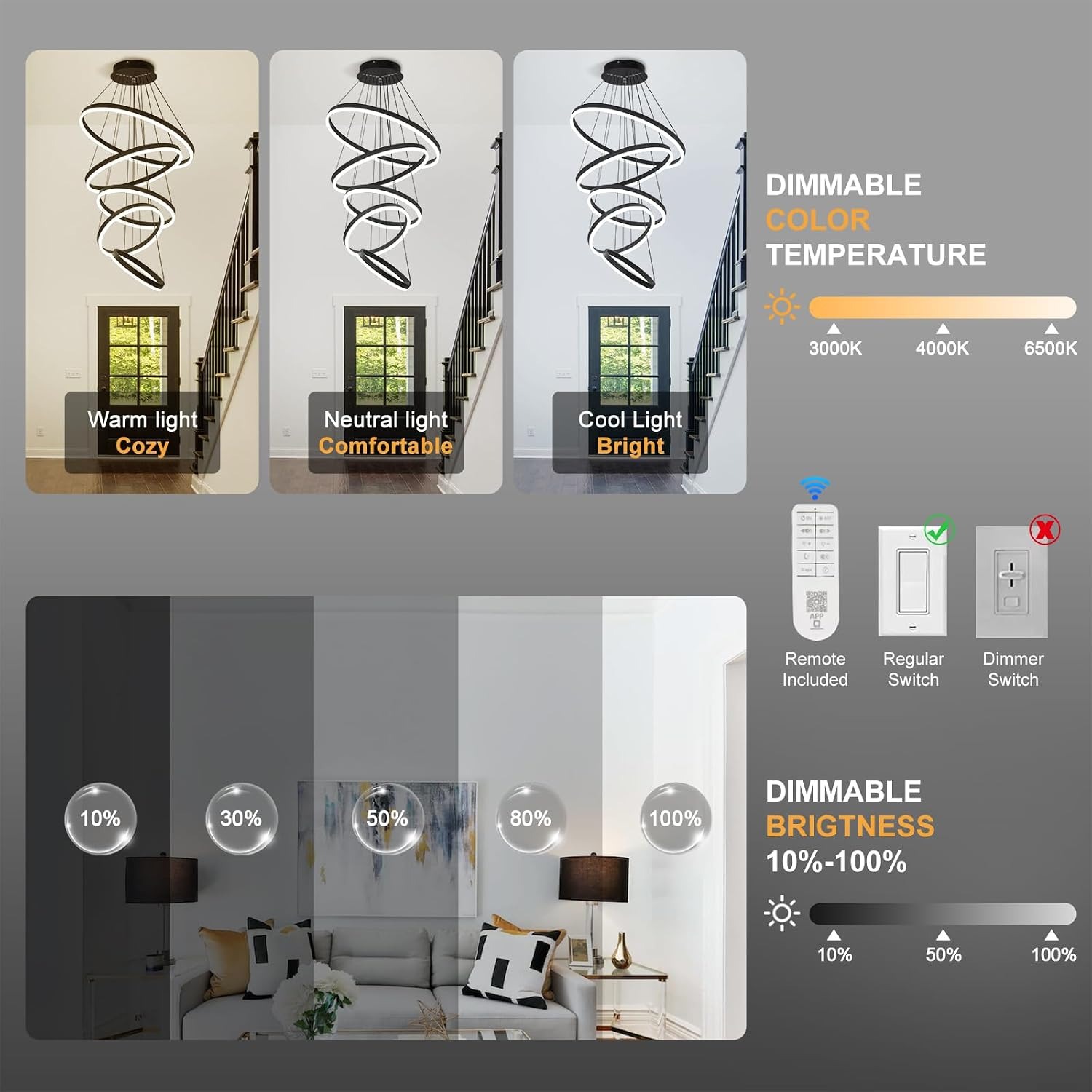
Control is all through the remote. Dim from 10% to 100%, and switch between 3000K, 4500K and 6500K. The important caveat is that it will not work with a wall dimmer switch. Wire it to a plain on/off switch and let the remote do the rest. If your electrician assumes a dimmer, say something before they start.
Who this suits
The obvious fit is a two-story foyer or an open stairwell. That is the shape of space this was designed around, and the independently adjustable cables let you trail the rings down alongside a staircase so the whole run is lit.
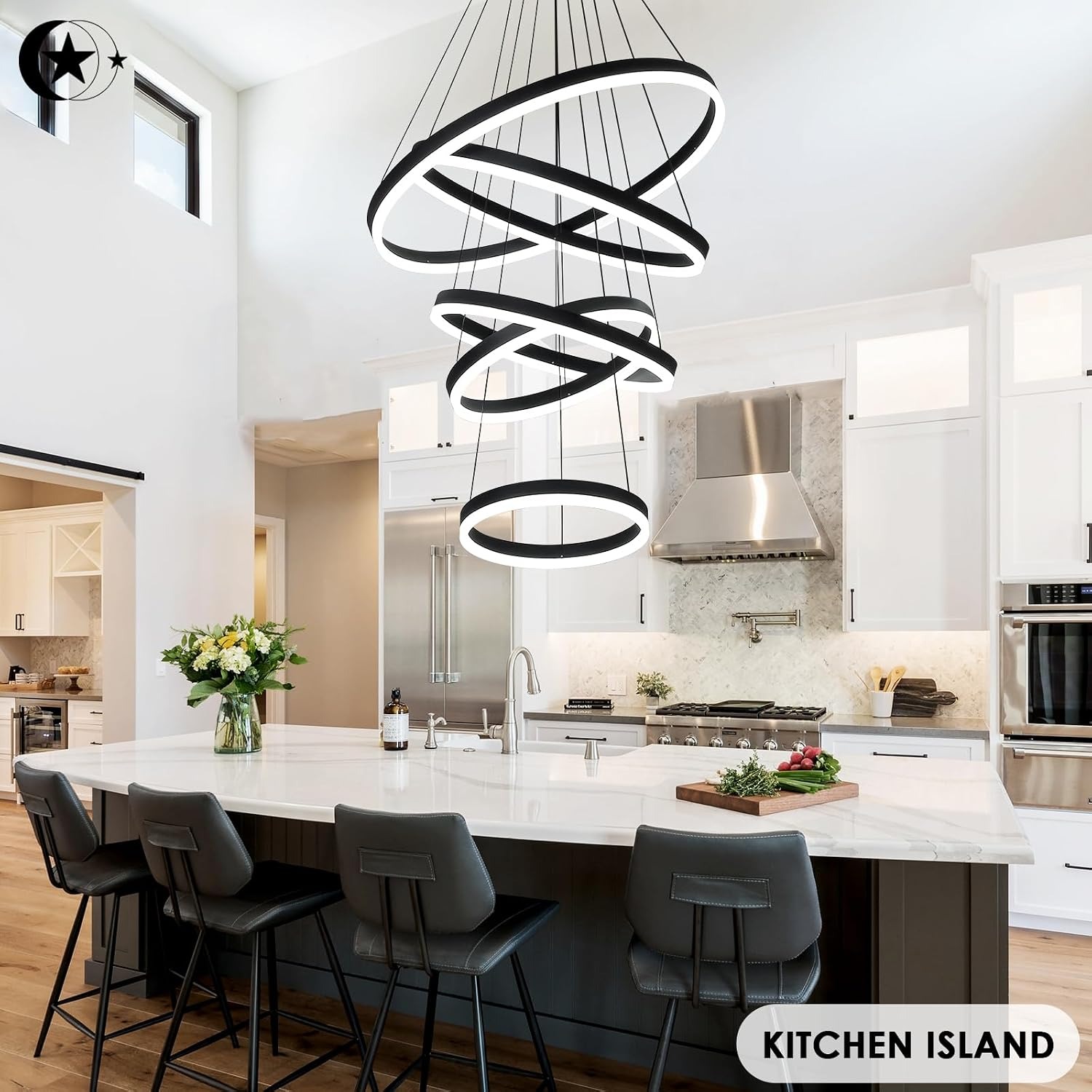
High-ceiling living rooms are the second case. A great room with a vaulted ceiling tends to swallow ordinary fittings, and something with physical presence holds the center of the room much better.
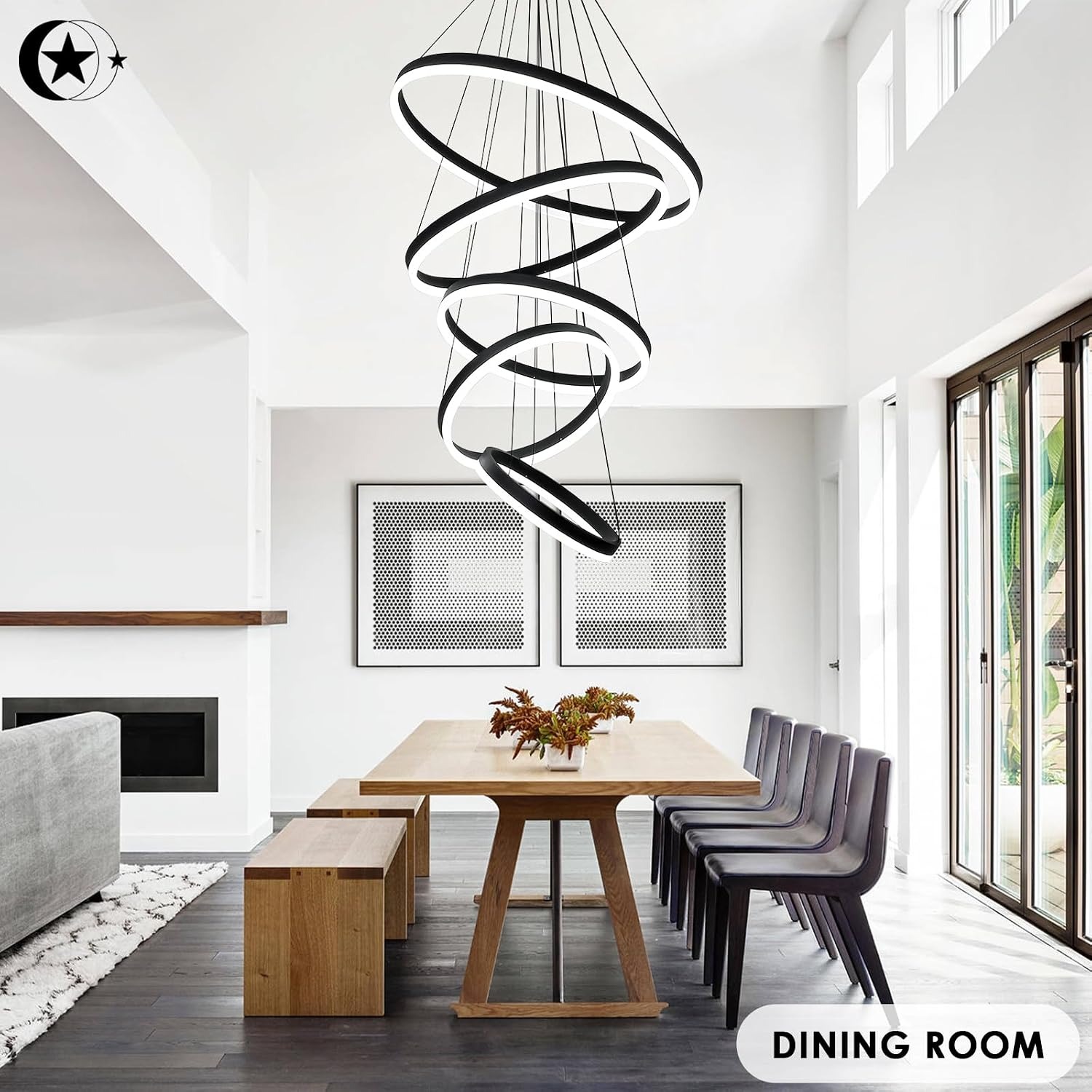
Over a dining table it works too, with a shorter drop. Set the lowest ring well above the eye line of seated guests and use the warm 3000K setting. The high CRI pays off here more than anywhere, because food and wood both look noticeably better under it.
It is less suited to a standard eight-foot bedroom or a small hallway. Not because it will not physically fit at a short drop, but because 7,000 lumens and a 23.6 inch widest ring is a lot of fixture for a modest room. Scale matters as much as brightness.
Choosing your drop
This is the decision people most often get wrong, so it is worth thinking about properly before installation day.
Measure from your ceiling to the floor below the fixture. Then decide what the lowest ring needs to clear. For a stairwell, it should be comfortably above head height on the highest step anyone passes under. For a foyer, aim for the fixture to feel centerd in the vertical space rather than hugging the ceiling or dangling awkwardly low.
Over a table, the rule of thumb is different. You want the bottom of the fixture roughly 30 to 36 inches above the tabletop, so people can see each other across it.
The full drop adjusts up to 74.8 inches and shortens from there, so most situations are covered. Work out the number before the electrician is on the ladder, because adjusting it afterwards means going back up.
Setting the ring layout
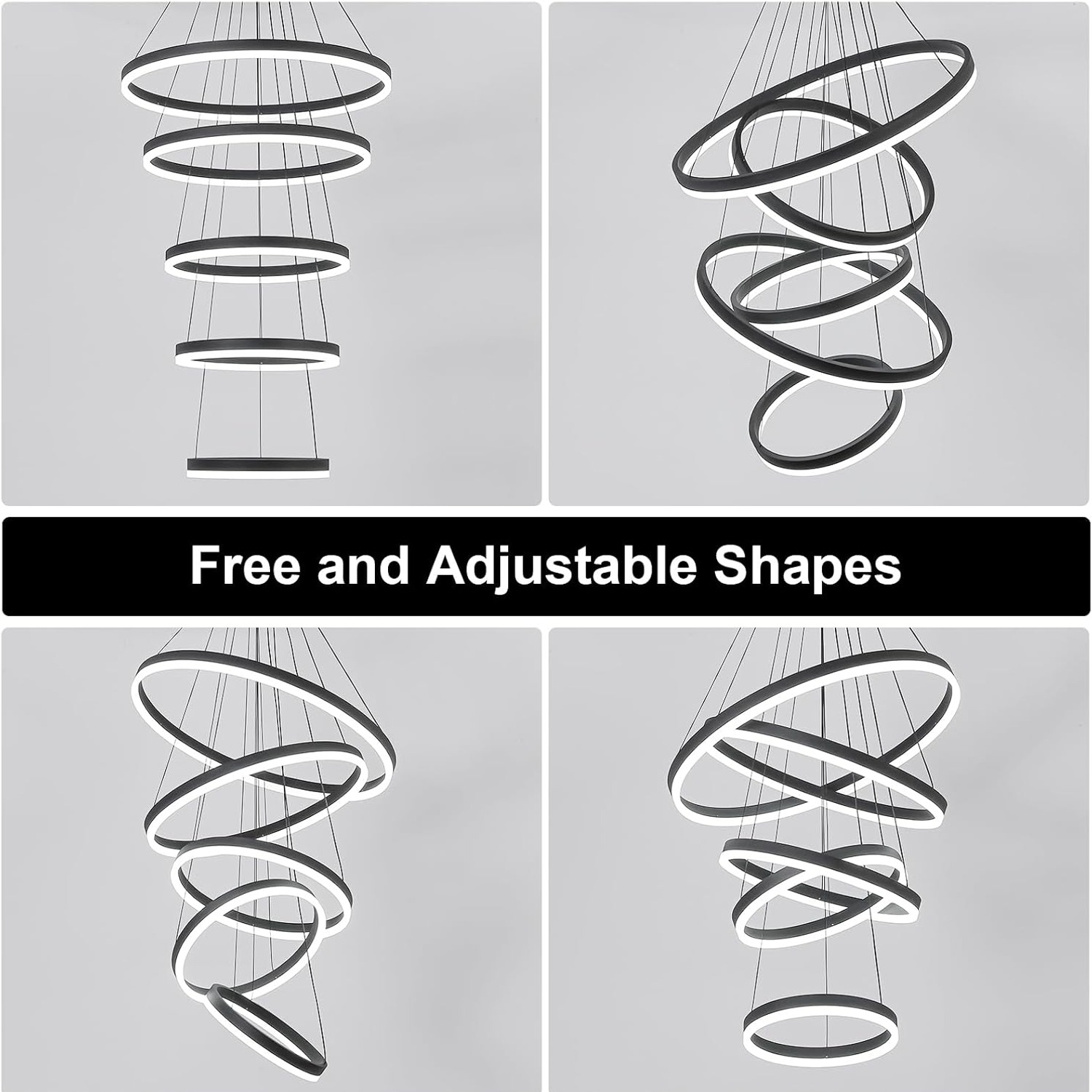
Each ring has its own cable and locking pin. That gives you three broad looks.
A concentric stack puts all five rings on the same vertical axis, largest at the bottom or the top, evenly spaced. It is the tidiest option and suits formal entries.
A spiral offsets each ring slightly from the one above, so the cluster twists as it descends. This is the arrangement most people picture when they think of a contemporary ring chandelier, and it photographs well.
A staggered cluster drops the rings at irregular heights and offsets. It looks less engineered and more sculptural, and it is the one to pick if you are following the diagonal of a staircase rather than a straight vertical.
Whichever you choose, set the pins firmly and the arrangement stays where you put it. Expect a small bend in the cables at first. They straighten out after the fixture has hung for a while under its own weight.
Installation notes
The fixture is hardwired and runs on 120 volts, so confirm that matches your supply. It weighs 11.08 pounds, light enough for most ceiling boxes, but the mounting point should still be checked by whoever installs it.
The canopy handles flat or sloped ceilings. On a slope, the individual cable adjustment is what lets you bring all five rings back to level.
Turn the power off at the breaker, not just the wall switch, before any work starts. Do not install or handle the fixture in damp conditions. It is rated indoor only and has no water resistance, so keep it out of bathrooms and anywhere humid.
The box contains the chandelier, driver, remote, mounting hardware and the manual. Nothing else needs to be bought separately.
Living with it
Day to day, there is very little to do. There are no bulbs to replace because the LED is integrated. Dust the rings occasionally with a soft dry cloth, with the power off and the fixture cool. Avoid solvents and abrasive pads, which will mark the acrylic.
If you are cleaning at height, make sure the ladder is stable and consider getting someone to help. The same access issue that makes installation a job for a professional applies to maintenance.
A two year manufacturer limited warranty covers the fixture. Keep your order details and the model number, 9003, somewhere you can find them.
The short version
If you have a tall entry, an open stairwell or a vaulted living room that feels unfinished, this fills the space and lights it properly. Five graduated rings, 7,000 lumens, high color accuracy, and a remote that handles both brightness and color temperature.
Plan the drop before installation. Wire it to a plain switch, not a dimmer. Decide whether you want the stacked, spiral or staggered look, and set the pins accordingly.
It is indoor only, hardwired, and worth having an electrician fit. Do those things and you get a fixture that changes how the whole room reads from the moment you walk in.