
The complete guide
How To Choose A Linear Pendant Light For A Kitchen Island
The problem with one light in the middle of the ceiling
Walk into most kitchens after dark and the lighting story is the same. There is a single fitting somewhere near the center of the ceiling, maybe a few downlights scattered around, and that is it. You stand at the island to chop an onion and your own body blocks the light. The far end of the counter sits in shadow. The room looks fine in photos and feels flat to be in.
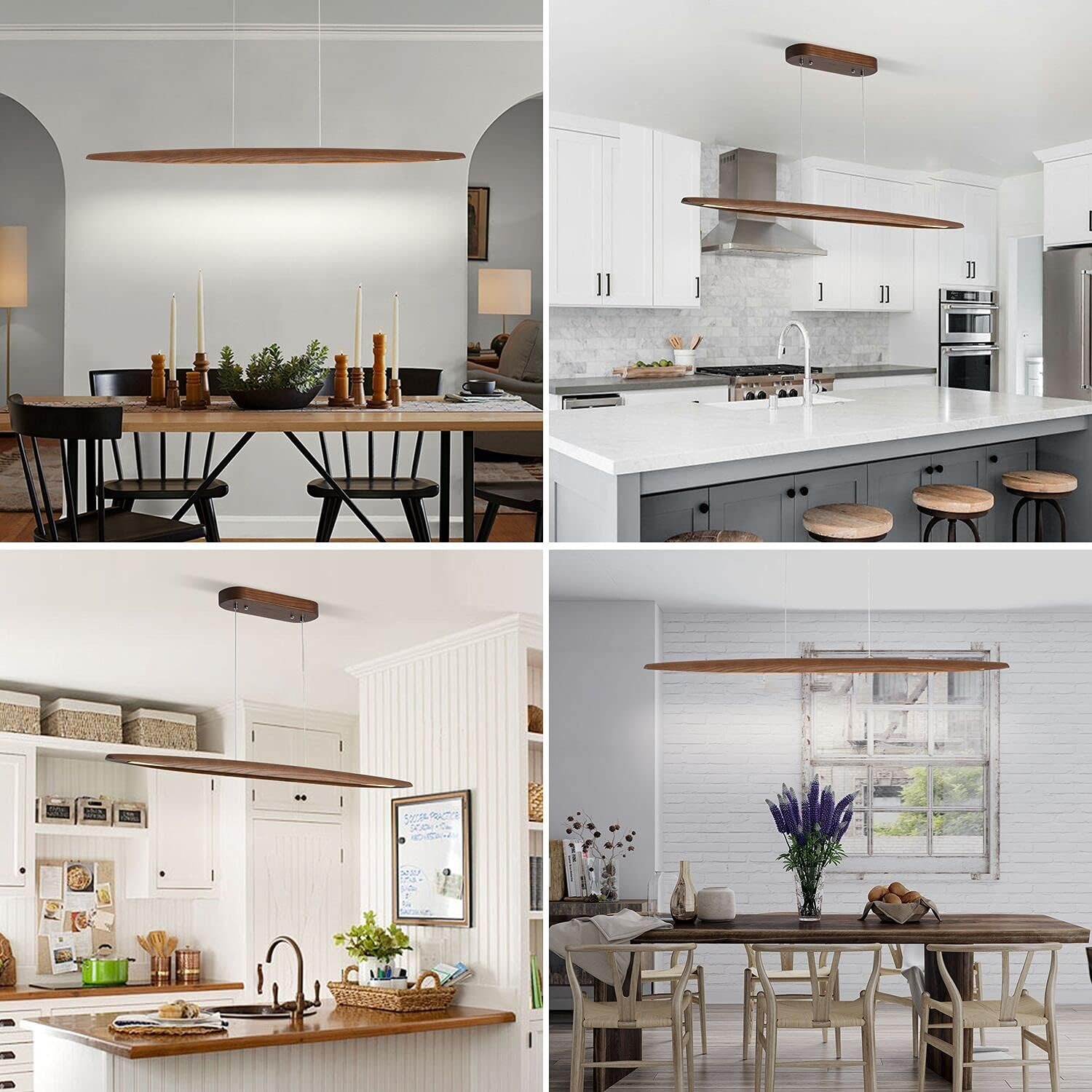
The fix is not more ceiling light. It is light placed where you work and eat. That is the whole reason linear pendants exist. A long narrow fixture hung directly over an island follows the shape of the surface below it, so the light lands on the worktop instead of the floor around it. You stop casting shadows on your own hands. The island becomes the brightest, friendliest part of the room, which is usually where everybody ends up standing anyway.
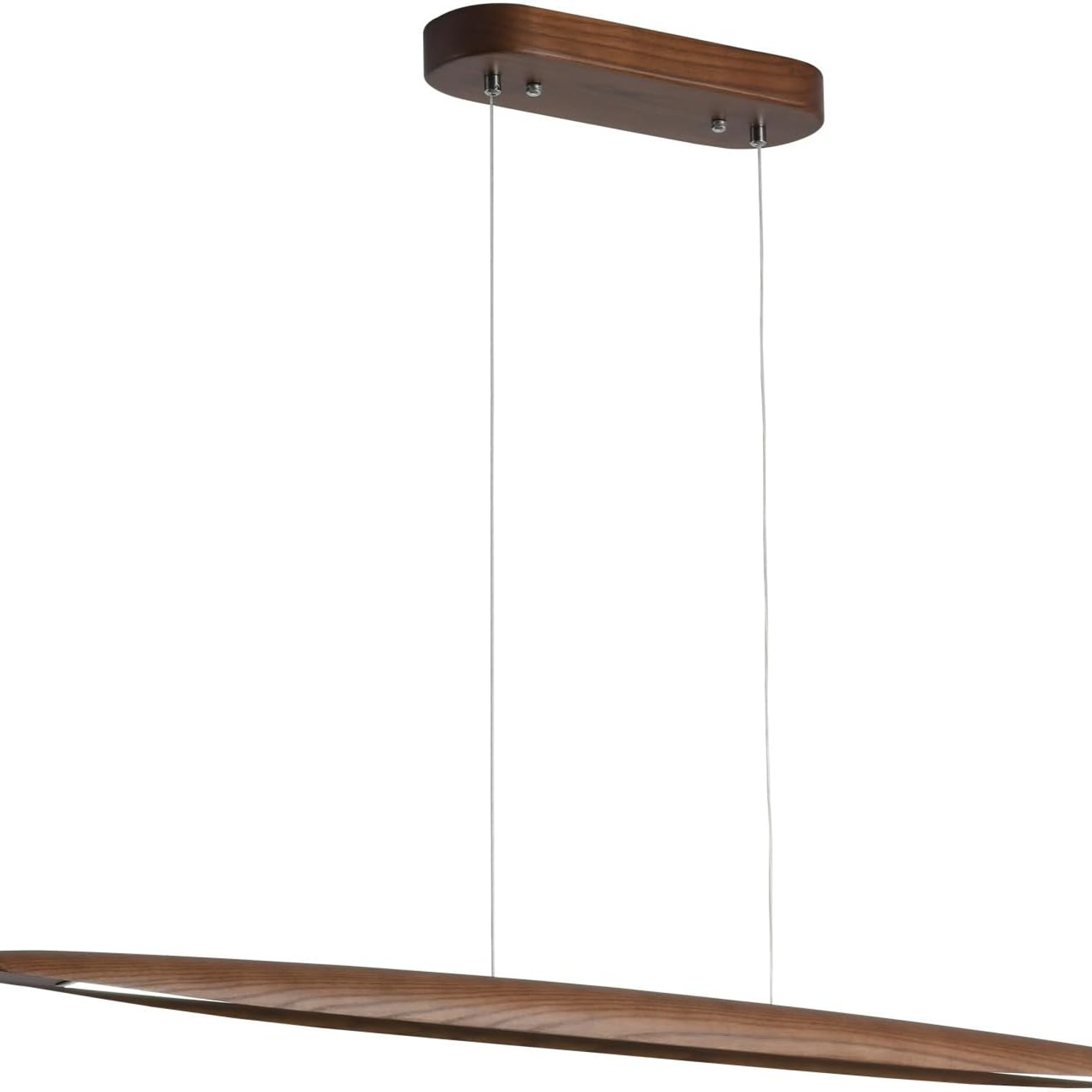
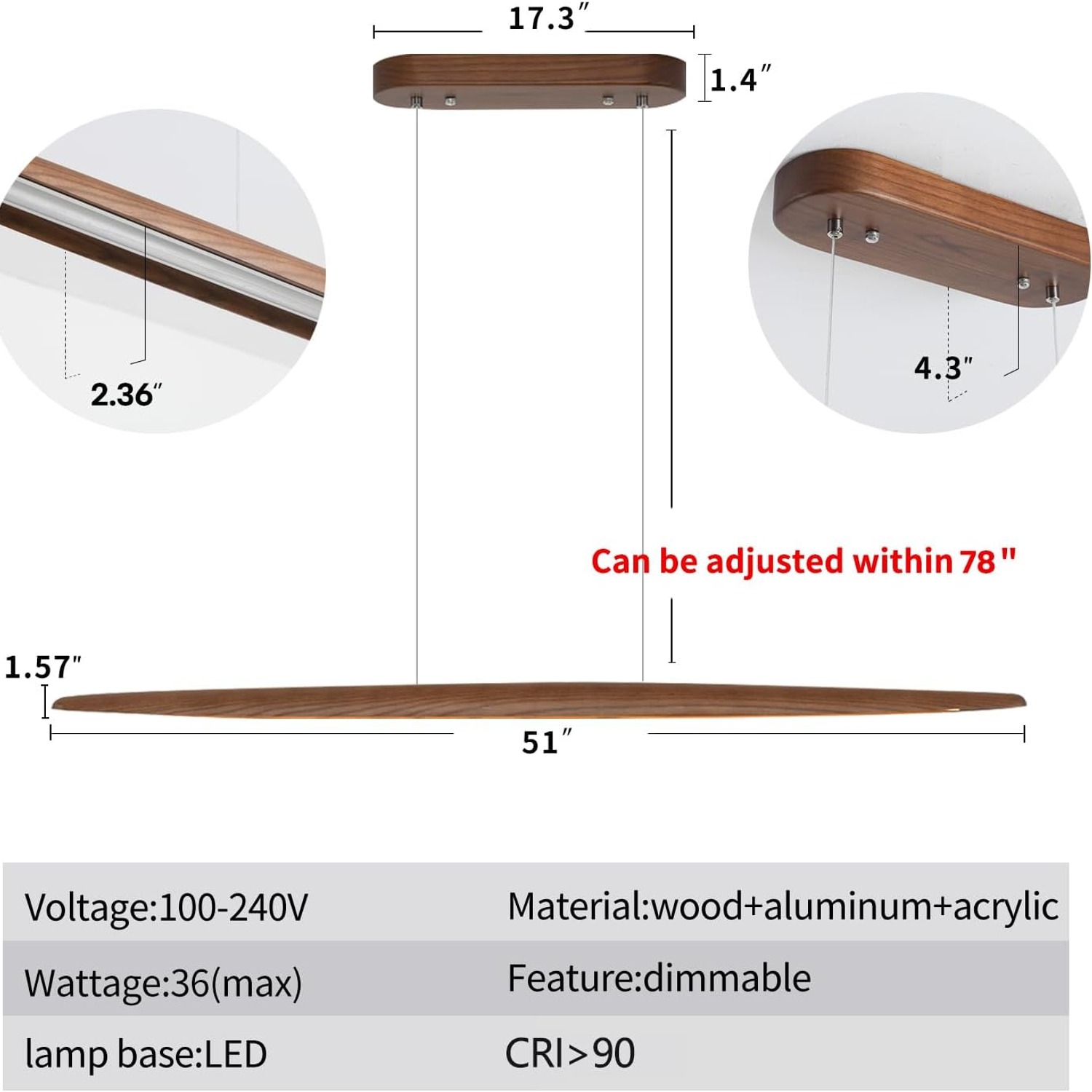
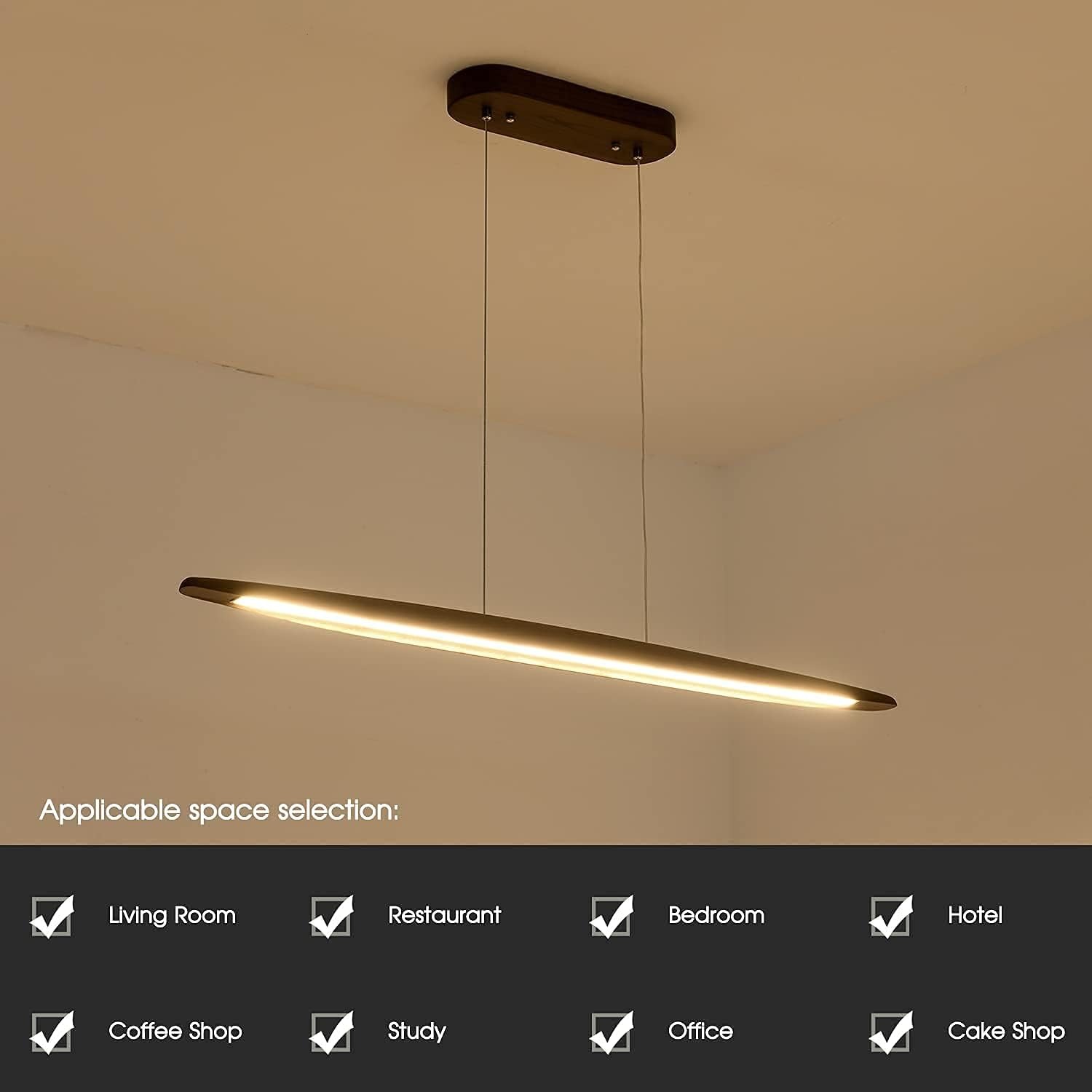
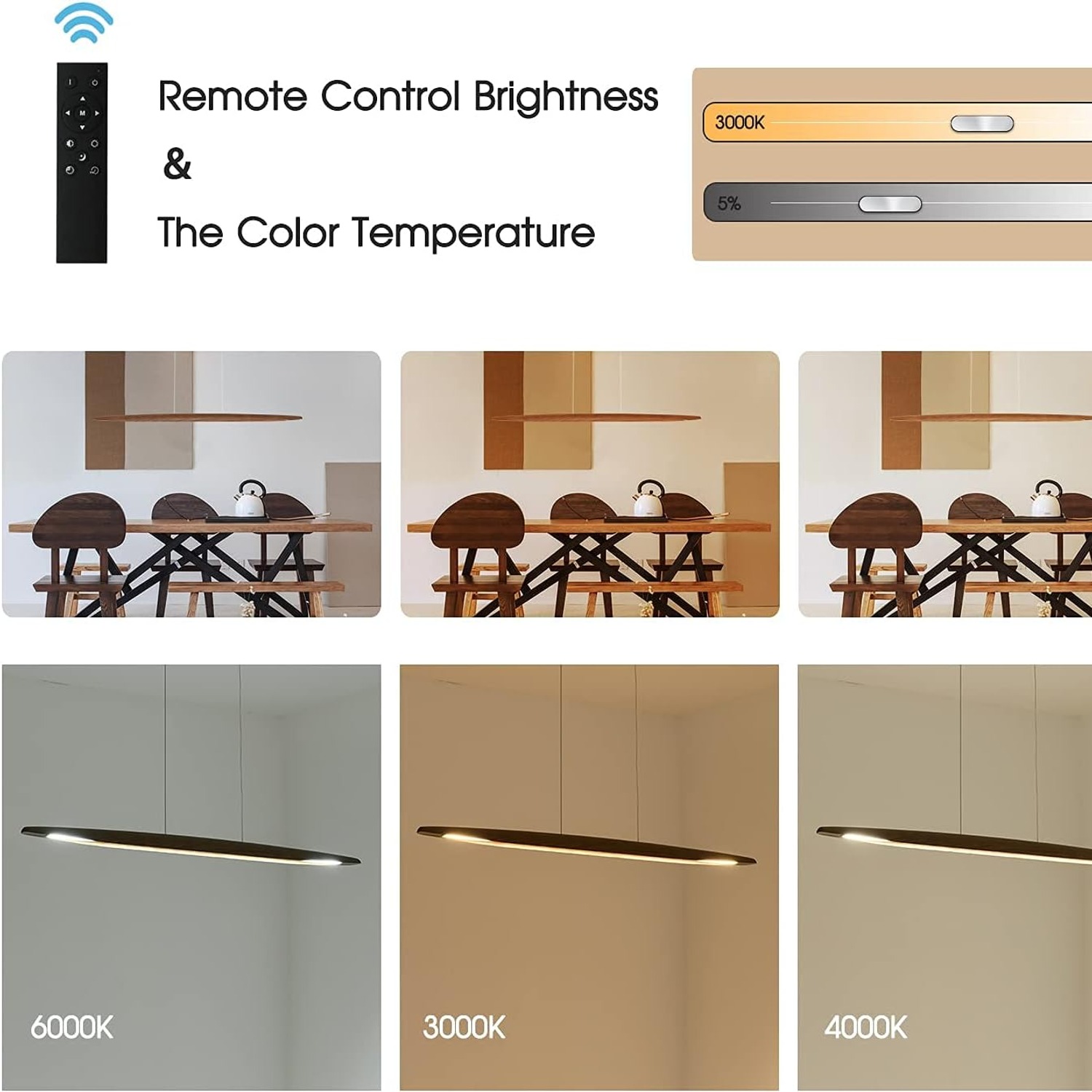
This particular fixture is 51 inches long and 2.6 inches wide, with a real wood body in a walnut finish. Inside is one integrated LED rated at 36 watts and 2068 lumens, tuned to 3000 Kelvin warm white.
How a linear LED pendant actually works
Older island lighting usually meant three separate pendants in a row, each with its own bulb. It looks good in a magazine. In practice you get three bright circles with dimmer patches between them, and three bulbs to match, replace and keep level.
An integrated linear fixture takes a different route. The light source runs along the inside of the housing as one continuous strip, diffused so you see a soft band rather than individual points. The result on a worktop is even coverage from one end to the other. No scalloping, no awkward dark spot right where you always put the chopping board.
The trade-off people ask about is bulb replacement. Here the specification lists an E27 base and describes the light source as removable and replaceable, so service is possible rather than the fixture being throwaway. LEDs in this class also run for a very long time compared with halogen, and they stay cool, which is part of why they last.
One wiring detail matters more than any other. Put a dimmer in front of it and you can get flicker.
Who this suits
If you have an island between roughly 150 and 230 cm long, a 51 inch fixture sits comfortably above it. The usual guideline is that the light should be shorter than the surface below, leaving a margin at each end so the proportions look deliberate.
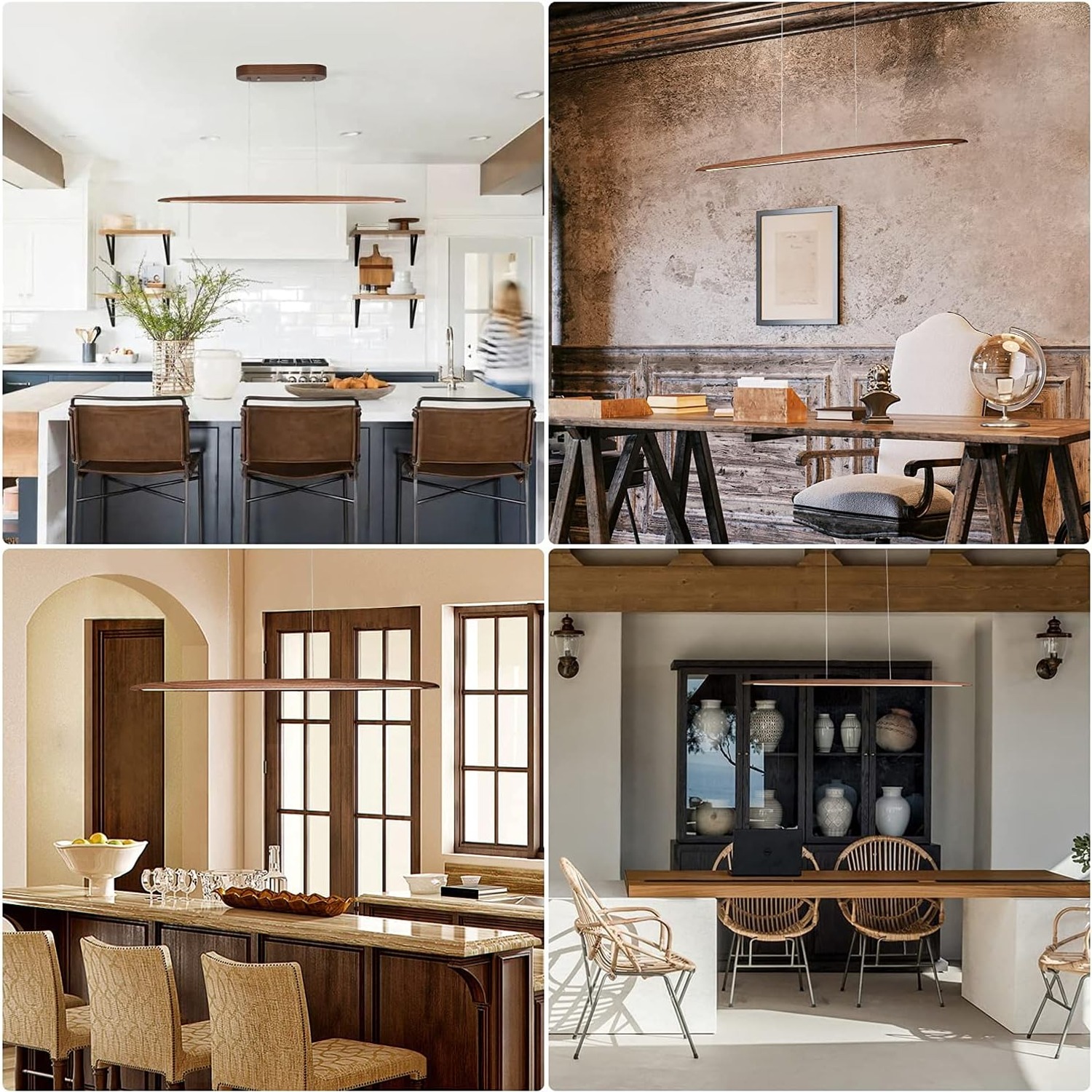
It also works as a dining room light fixture over a rectangular table. Same rule applies. A long table with a long light reads as one considered piece. A long table with a small round pendant in the middle tends to look like an afterthought.
The listed room types include home office, and a linear fixture over a desk is genuinely good for paperwork. Just know that 3000K is warm rather than cool, so it will feel more like a reading lamp than a daylight panel. Plenty of people prefer that at a desk.
Where it does not belong is anywhere damp. It is indoor only and not water resistant, so bathrooms, laundries, covered decks and outdoor kitchens are out.
Picking the right length and height
Start with a tape measure, not a photo. Measure the length of your island or table, then subtract about 30 cm total to give yourself margin at both ends. If your island is 180 cm, a 51 inch fixture (about 130 cm) leaves roughly 25 cm clear at each side. That looks right.
Height is the other half. For an island, aim to have the bottom of the fixture around 75 to 90 cm above the worktop. Over a dining table you can often go a little lower, because nobody is standing underneath. If you have very high ceilings, lower is usually better than higher, since a pendant stranded near the ceiling stops doing its job.
Think about sightlines too. If the island separates the kitchen from a living area, you want the light low enough to be useful but high enough that it does not cut the view in half when you are seated. Hold a broom handle at the planned height and look at it from the sofa before you drill anything.
Finally, check what is already on the ceiling. This is a semi flush mount fixture that attaches to a junction box, and the mounting plate is sized to cover a standard electrical box. If your existing point is not centerd over the island, moving it is an electrician job and worth budgeting for.
Why wood changes the feel of a kitchen
Kitchens tend to accumulate hard surfaces. Stone benchtops, tiled splashbacks, stainless appliances, glossy cabinet doors. All of it reflects and all of it is cold to the eye. One wood element overhead does a surprising amount of work to settle the room down.
The body here is real wood with a walnut color, sanded and painted rather than foil-wrapped. The practical difference is in how it ages and how it catches daylight. A printed finish looks flat from certain angles. Wood does not. And because the fixture is only 2.6 inches wide, it reads as a clean line rather than a slab.
Grain varies between pieces of wood. If you are the sort of person who wants two identical units to match exactly, bear that in mind. Most people treat the variation as the point.
Living with it, day to day
Cleaning is simple. Kill the power at the wall, wipe the wood with a soft dry cloth, and use a barely damp cloth only if there is a mark. Dry it straight after. Avoid solvents, furniture polish and abrasive pads, all of which can dull a painted wood surface.
Dust the diffuser occasionally too. A thin film of kitchen grease and dust will quietly cut your light output over a year or two, and most people blame the LED when the real culprit is the surface in front of it.
Keep the fixture dry. That sounds obvious until you remember how much steam comes off a pot of pasta directly below. A rangehood that actually vents outside is worth having for a dozen reasons, and protecting your lighting is one of them.
The short version
A kitchen island deserves its own light, and a long narrow one placed directly overhead beats a single ceiling fitting every time. It mounts semi flush to a standard ceiling box and weighs 2.27 kg, so installation is straightforward for an electrician.
Get those three things right and it will look like it was designed into the kitchen from the start.