

The complete guide
How to Choose a Bubble Glass Chandelier That Fits Your Room
The problem with most ceiling lights
Walk through almost any home and the ceiling lights are the weakest part of the room. A flat disc. A frosted dome. Something that came with the house and has been quietly ignored ever since. The furniture gets chosen carefully, the paint gets three sample patches, and then the light above it all is whatever was cheapest at the hardware store.
That matters more than people expect, because the ceiling fitting is doing two jobs at once. It is lighting the room, and it is sitting in everyone's eye line every time they look up or sit down at a table. A flat disc does the first job adequately and the second job not at all.
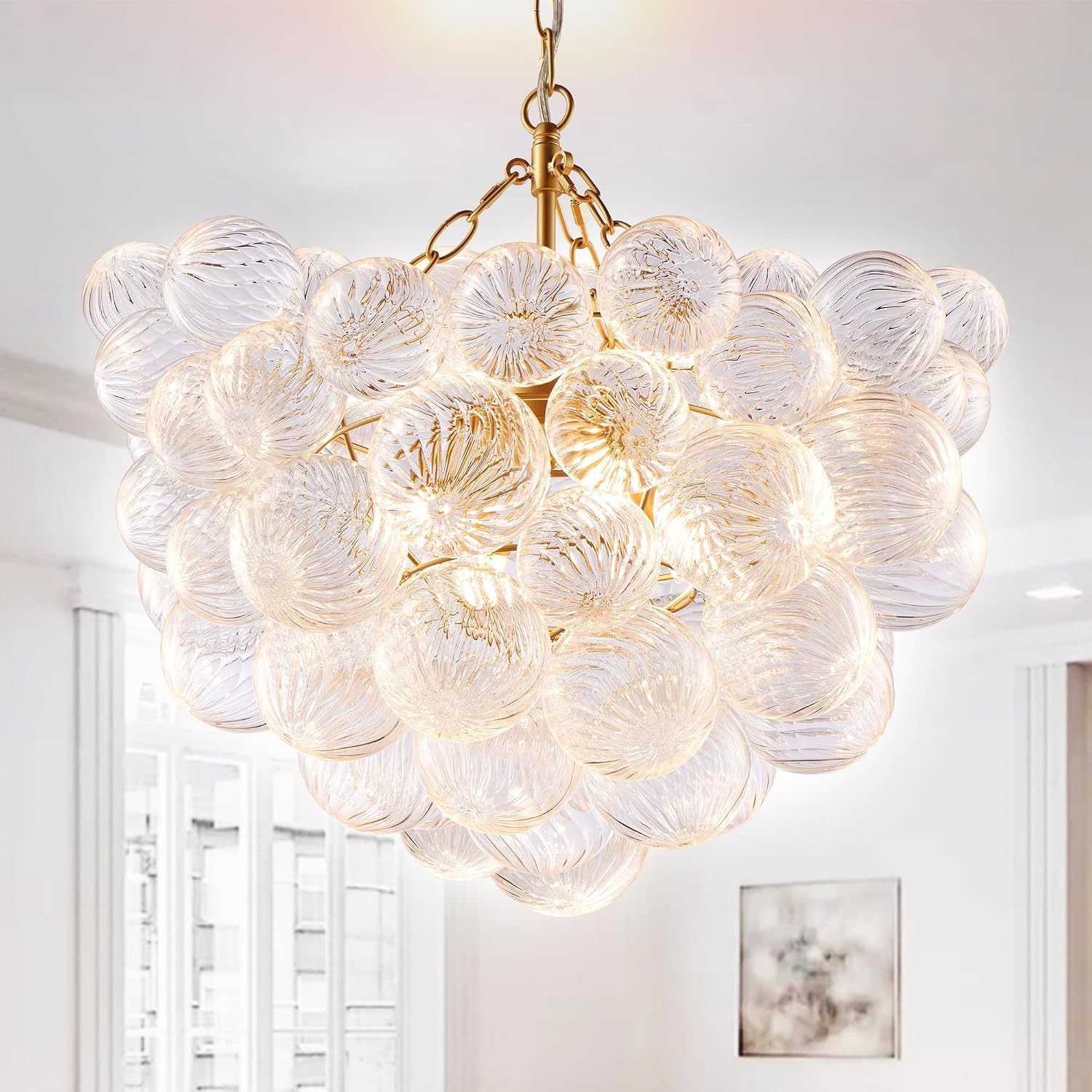
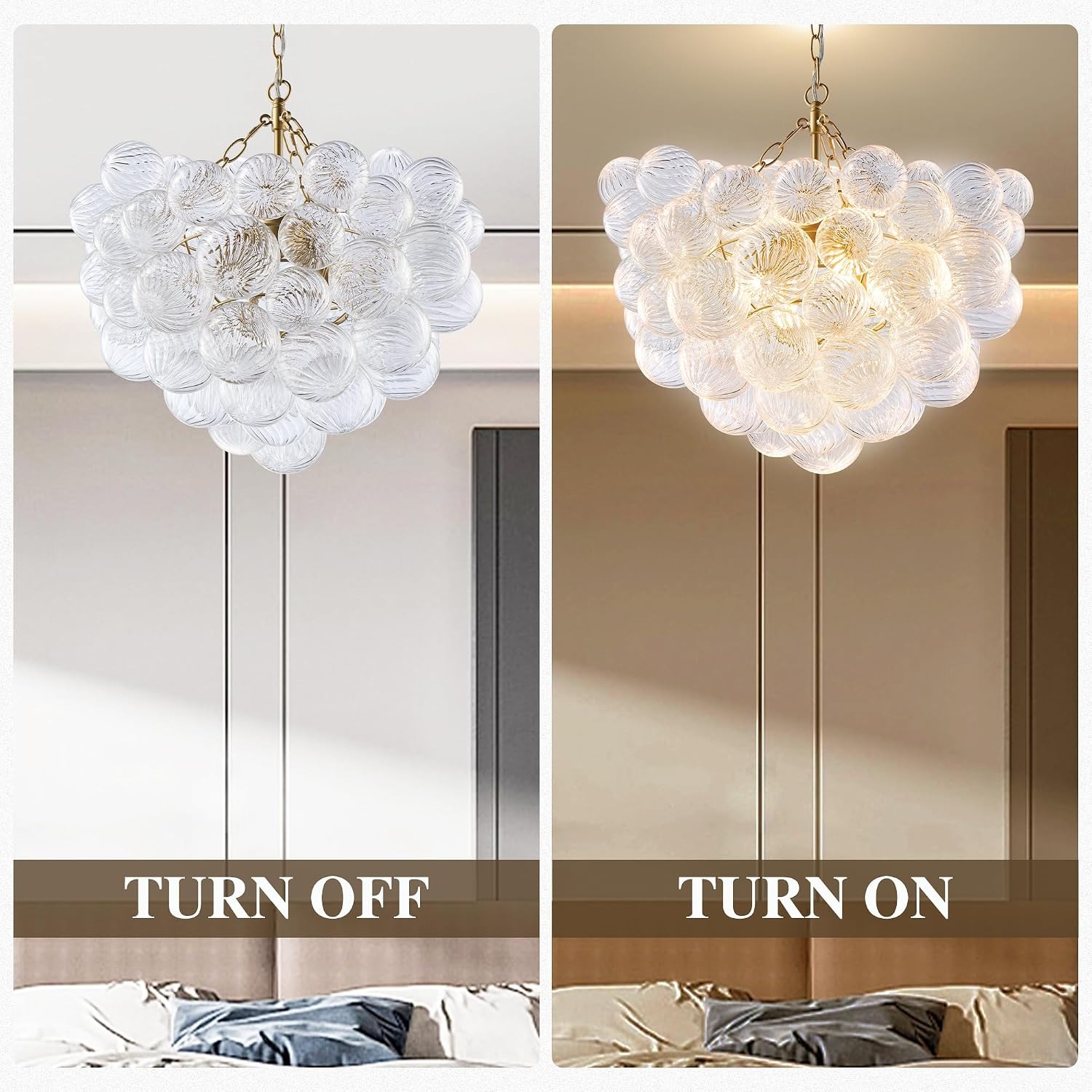
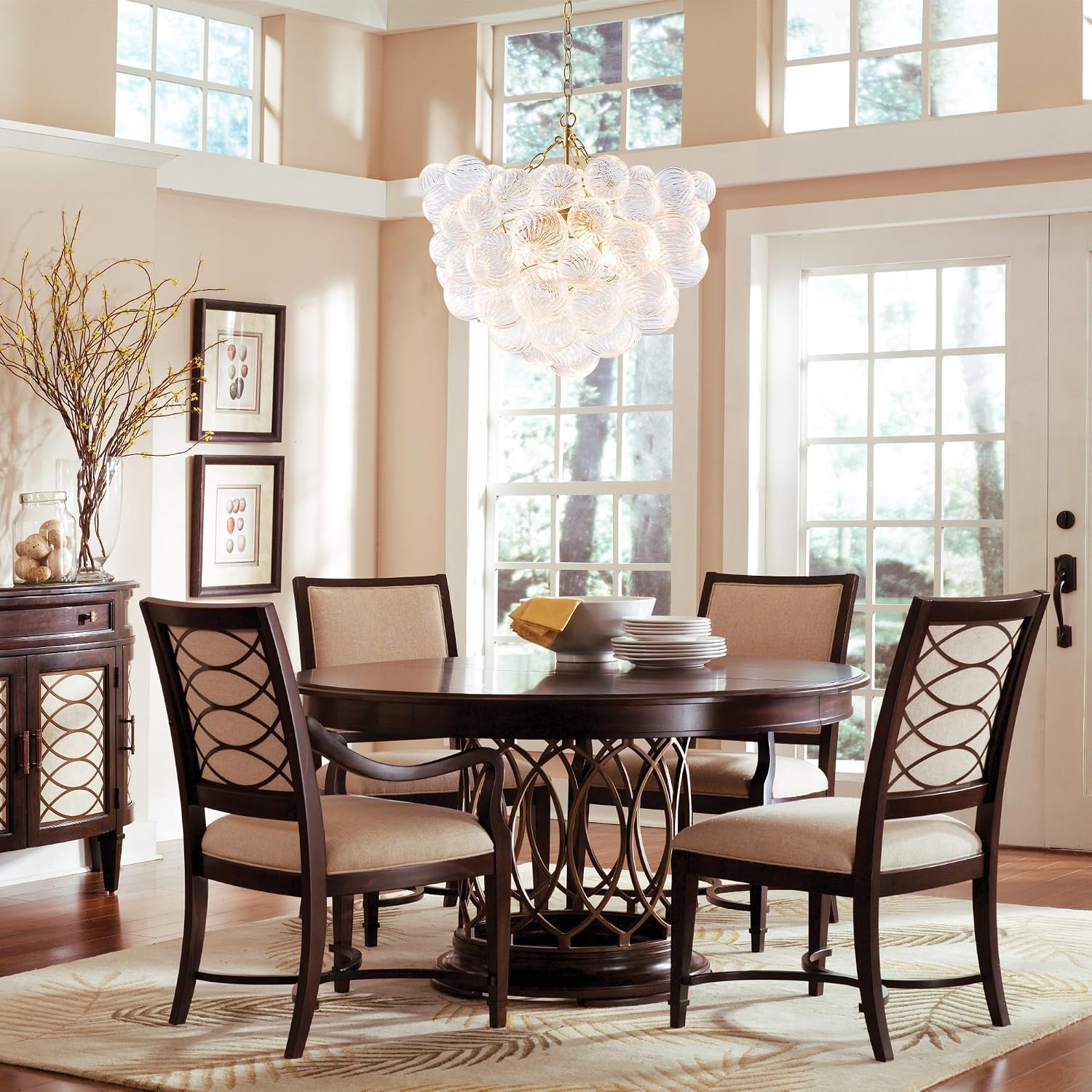
A bubble glass chandelier flips that. The glass gives the fixture something to say when it is off, and something interesting to do when it is on. You are buying a light and a small sculpture in the same purchase.
How this one works
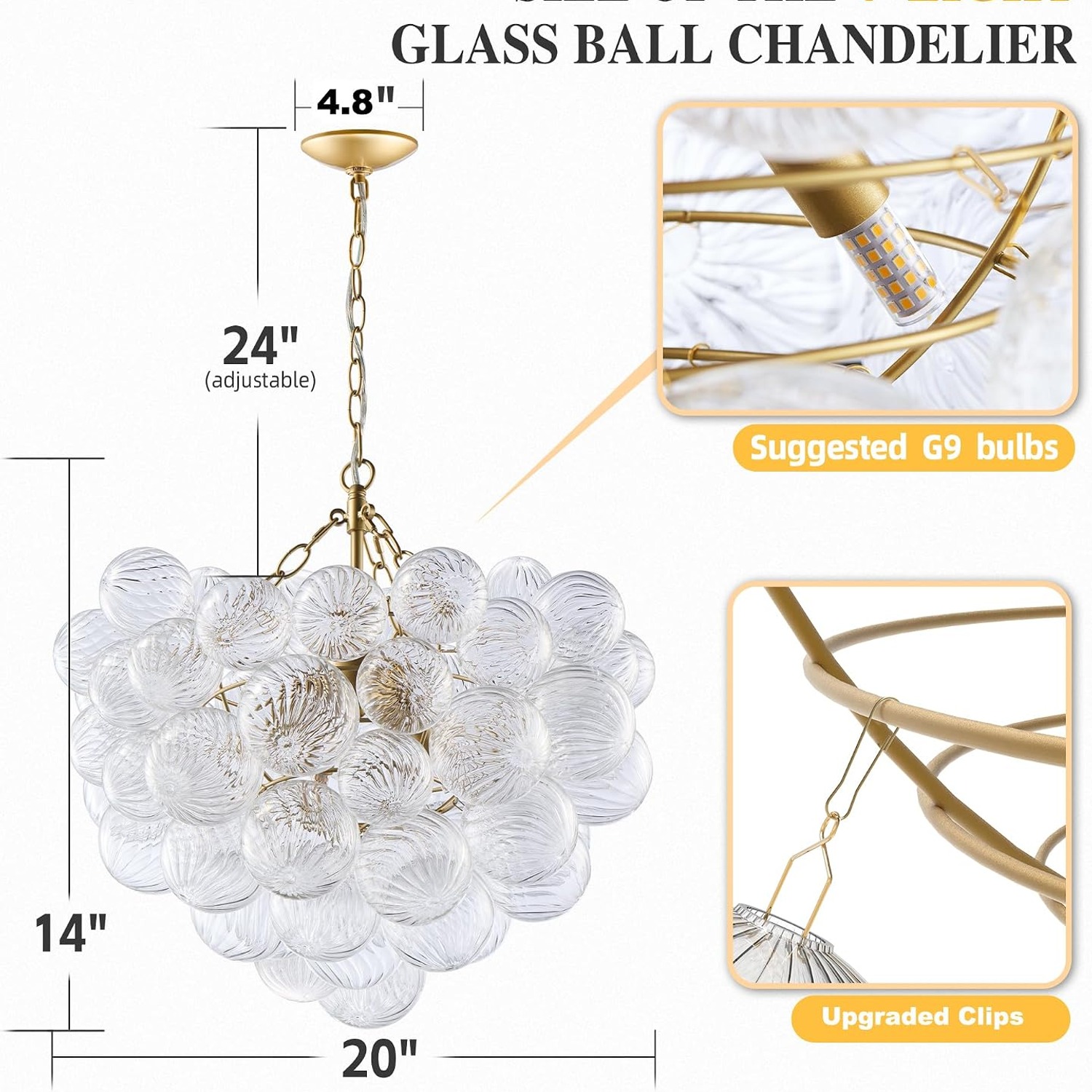
The build is simple in principle. Four hand blown glass globes, each with a swirled, ribbed surface, are held in a loose cluster by a gold finished metal frame. Inside each globe sits a G9 LED bulb. The whole thing hangs from a canopy on a chain.
What makes the difference is the texture of the glass. Plain clear glass is honest but a bit dull, because the light passes straight through and you see the bulb. Swirled glass bends that light. It pools in the ridges, throws soft shapes onto the ceiling, and hides the hard edge of the bulb filament. That is why a swirled glass chandelier looks expensive even at modest brightness.
The bulbs that come with it are 9 watts each, rated at 3000 Kelvin. In plain terms that is warm white, the color of light you want in a dining room or a bedroom. Total output across the four is up to 600 lumens. That is a comfortable ambient glow, not a work light, and knowing this in advance saves disappointment later.
The fixture is also set up for dimming. Fit dimmable LED bulbs, run it on a dimmer circuit, and the glass changes character as you drop the level. The warmth deepens and the swirls become far more obvious. If you have the option, the dimmer is worth the extra cost at install time.
Who it suits
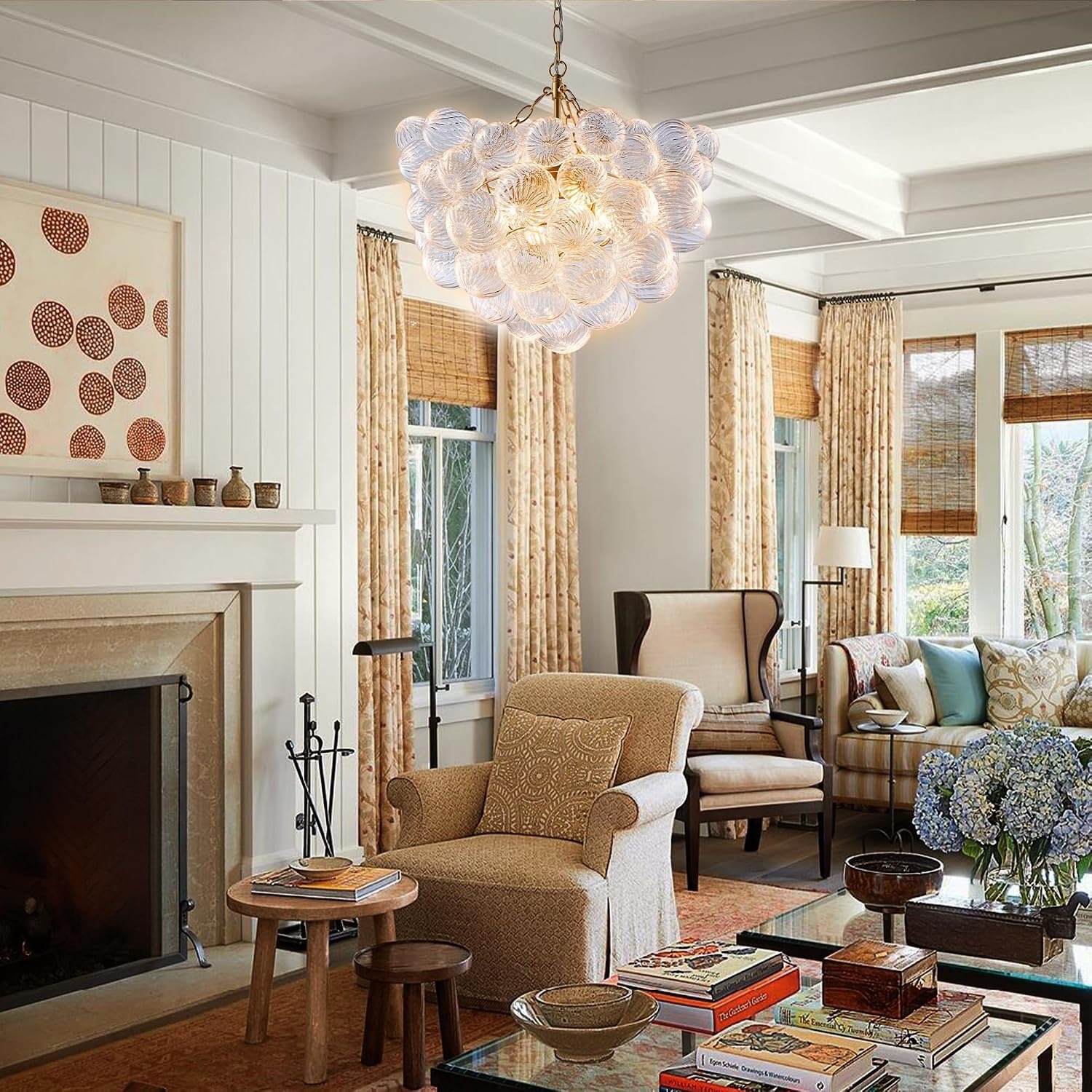
This works best in rooms where people sit rather than rush. Over a round dining table it is close to ideal, because the cluster shape echoes the shape of the table and the drop can be set so it sits above eye line. In a bedroom it gives a soft overhead without the glare of a bare fitting. In an entry or stairwell with decent ceiling height it becomes the first thing a visitor sees.
It suits modern and mid-century rooms, and it does well in rooms that already have some warm metal in them. Brass faucets, gold cabinet handles, a bronze mirror frame. The lacquered gold on the frame picks those up and ties them together.
It is less suited to very low ceilings, to rooms where you need serious task light from above, and to anywhere damp. The fixture is indoor only with no water resistance rating, so shower rooms and covered outdoor areas are off the list. A dry powder room is fine.
Getting the size right
Most sizing mistakes come from guessing. Two simple checks will save you.
For a table, measure the table. The fixture should be at least 6 inches narrower than the table so nobody knocks it reaching for a dish. For a round table, a fixture somewhere between half and three quarters of the table diameter usually looks balanced. This chandelier is 20 inches across, which sits nicely over a round table of roughly 30 to 40 inches.
For height, the usual guide is 30 to 36 inches between the bottom of the fixture and the table surface. Low enough to feel like it belongs to the table, high enough that you can see the person opposite you. Add a little if your ceilings are above the standard 8 feet.
In a walkway or entry, forget the table rules and think about heads. Keep at least 7 feet of clear space from the floor to the lowest point of the glass. The chain is 24 inches and adjustable, so links can come out before you mount it.
Installing it without drama
The fixture weighs 10 pounds, which is 4.54 kg. That is modest for a chandelier, but the ceiling box still needs to be rated to carry it. Most modern boxes are. Older ones, particularly in renovated spaces, sometimes are not, and that is the one check worth doing before you order.
It is rated 110 volts AC. If your mains supply runs at 220 to 240 volts, speak to a licensed electrician before installing anything. Do not assume that swapping bulbs solves it.
The chain mount also means this works on sloped ceilings, which is useful in loft rooms and extensions where a rigid stem would hang crooked. Mounting hardware, instructions, the shades and the bulbs are all supplied, so there is nothing to source separately.
In many countries, fixed wiring work has to be done by a licensed professional. Even where it does not, an electrician will have this up in well under an hour and will leave the canopy sitting flush, which is harder than it looks when you are balancing on a ladder.
Looking after it
Glass and lacquered metal both reward light, regular care and punish neglect.
Dust is the main enemy. A soft dry cloth or a clean microfibre duster across the globes every few weeks keeps the light output where it should be, because dust on glass genuinely dims a room. For fingerprints, dampen the cloth slightly, wipe, then dry immediately. Keep moisture well away from the sockets.
Skip the spray cleaners and the abrasive pads. Solvents can soften lacquer over time, which is how a gold finish starts looking patchy. Once or twice a year, with the power off, check that the bulbs are seated firmly and that the canopy and chain fittings are still snug.
Bulbs are replaceable and the globes can be replaced individually, so one accident does not mean starting over.
The short version
This is a 20 inch, four-light chandelier with swirled hand blown glass globes and a gold lacquered frame. It includes four warm 3000K G9 LED bulbs, puts out up to 600 lumens, and hangs on a 24 inch adjustable chain that handles sloped ceilings. It runs on 110 volts, is indoor only, and weighs 4.54 kg.
Measure your table, check your ceiling height, and if you can, put it on a dimmer. Do those three things and you end up with a ceiling worth looking at.